
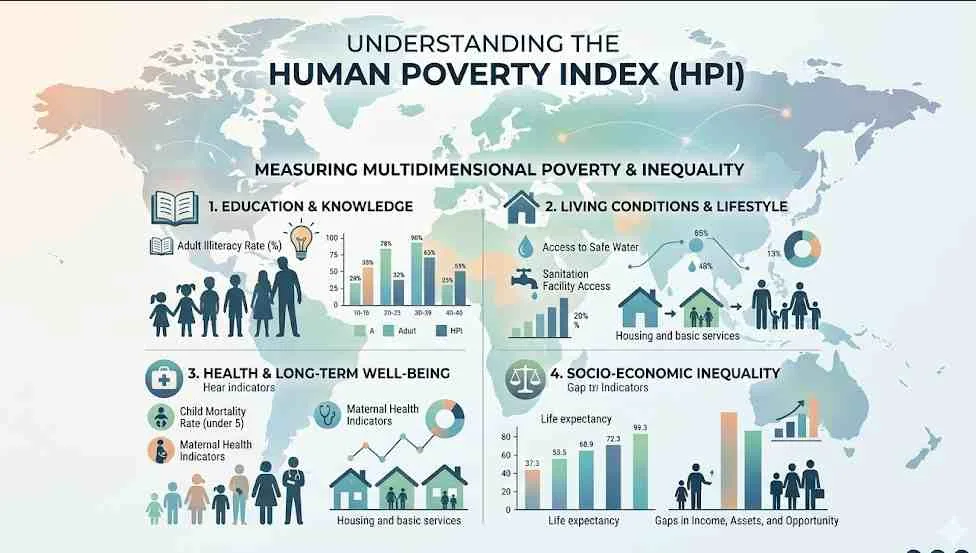


The Human Poverty Index was an older UNDP measure of poverty that looked at human deprivation in key areas such as survival, knowledge, and standard of living instead of looking only at income. It was designed to show that poverty is multidimensional, but it has largely been replaced by the Multidimensional Poverty Index, or MPI, which measures overlapping deprivations more directly at the household level.
This means the HPI is still important for understanding the history of poverty measurement, but it is no longer the main headline poverty measure used by UNDP. Today, the global MPI is the more common multidimensional poverty measure in UNDP and Human Development Reports.
What the Human Poverty Index Means
The Human Poverty Index was created to capture the idea that poverty is about deprivation in human life, not only about income below a poverty line. UNDP’s poverty measurement brief says the HPI was the first multidimensional poverty measure presented in the 1997 Human Development Report. That was a major shift because it moved poverty discussion toward lived disadvantage.
In simple language, HPI tried to answer this question. How many people are deprived in basic parts of life such as living long enough, gaining knowledge, and maintaining a decent standard of living. That made it different from income poverty measures, which usually focus only on whether someone earns below a fixed money threshold.
So the meaning of HPI is basically this. It is a human deprivation measure that tried to show poverty as a wider condition of limited life chances, not just low income. That is why it mattered so much in human development thinking.
Why the Human Poverty Index Was Created
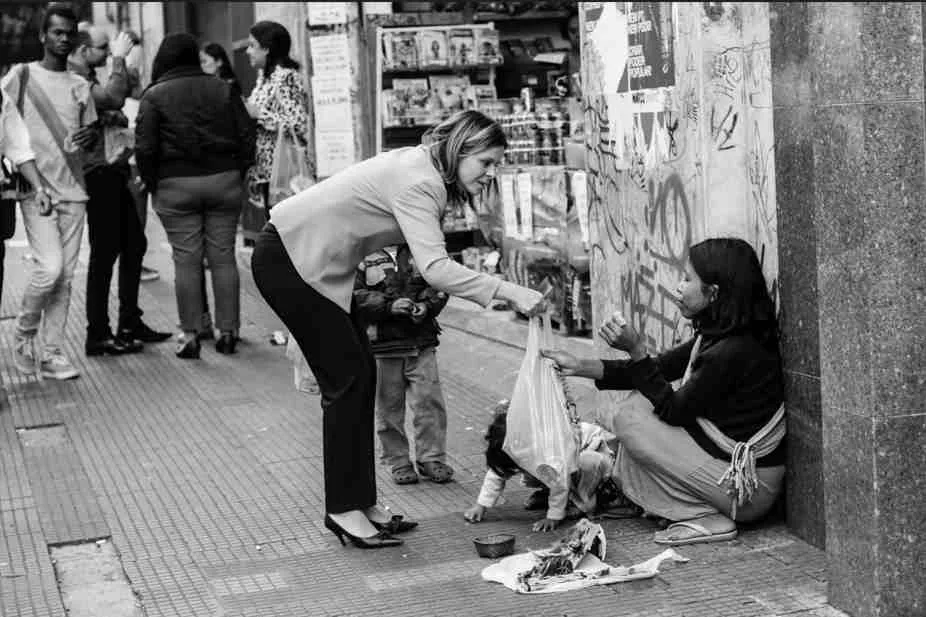
The Human Poverty Index was created because development experts increasingly recognized that income alone could not fully describe poverty. A person might earn slightly above a poverty line and still suffer severe deprivation in health, education, or basic living conditions. UNDP’s work on poverty measurement explains that multidimensional measures were needed to reflect those wider realities. ([undp.org]
This was part of the larger human development approach, which argued that development should be about expanding human capabilities and opportunities. In that framework, poverty is not only lack of money. It is lack of access to a decent life. That is the core idea HPI tried to represent.
So the HPI was created to shift the conversation. Instead of asking only who is income poor, it asked who is deprived in fundamental dimensions of human well being. That was a big conceptual step forward at the time.
The Two Main Versions, HPI 1 and HPI 2
One reason students get confused is that the Human Poverty Index did not exist in only one form. The older UNDP primer explains that HPI 1 was created for developing countries and HPI 2 was created for selected high income OECD countries. These two versions used different indicators because poverty shows itself differently across country contexts.
HPI 1 focused more on deprivation in survival, knowledge, and decent living standards in developing countries. HPI 2 added social exclusion type concerns relevant to richer countries, such as long term unemployment. That difference matters because UNDP was trying to make the measure fit different development realities rather than forcing one identical index everywhere.
So when someone says Human Poverty Index, it is useful to remember there were two main versions depending on the country group being analyzed.
What HPI 1 Measured
HPI 1, the version used for developing countries, captured three broad forms of deprivation. The UNDP primer explains that these were deprivation in longevity, deprivation in knowledge, and deprivation in a decent standard of living. Those dimensions were then represented with specific indicators.
For longevity, HPI 1 looked at the probability of not surviving to age 40. For knowledge, it used adult illiteracy. For standard of living, it combined indicators linked to access to safe water, health services, and the share of underweight children under age five. The idea was to create one summary measure of major deprivation in human life.
This structure shows clearly why the HPI was called human poverty rather than income poverty. It was trying to capture whether people lacked the most basic conditions for a healthy and dignified life.
| HPI 1 dimension | Main indicator | What it meant |
|---|---|---|
| Longevity | Probability of not surviving to age 40 | Risk of early death |
| Knowledge | Adult illiteracy rate | Lack of basic education |
| Standard of living | Composite of safe water, health services, underweight children | Lack of basic life conditions |
What HPI 2 Measured
HPI 2 adapted the human poverty idea for selected richer countries. The UNDP primer says it covered deprivation in longevity, knowledge, decent living standards, and social exclusion. Because poverty in richer countries often looks different from poverty in poorer countries, the indicators were adjusted.
For example, HPI 2 looked at the probability of not surviving to age 60, the share of adults lacking functional literacy skills, the proportion of people below the income poverty line, and long term unemployment. This reflected the fact that social exclusion and labor market detachment matter more visibly in richer economies.
This version is useful because it shows that human poverty was never seen as identical across all societies. The form of deprivation can change with development level, and UNDP tried to reflect that in the HPI structure.
Why the Human Poverty Index Was Important
The HPI was important because it helped move the development conversation away from the idea that poverty could be understood by income alone. UNDP’s issue brief says it was the first multidimensional poverty measure presented in a Human Development Report, which made it a landmark concept in development thinking.
That mattered for policy too. Once poverty is seen as multidimensional, the policy response changes. Governments need to think about education, health, water access, nutrition, and other social conditions, not just average income. The HPI helped push that broader understanding into mainstream development work.
So even though the HPI is older now, its historical role is still very important. It was one of the bridges that helped move poverty measurement toward richer and more human centered methods.
Why the Human Poverty Index Was Replaced
The HPI was influential, but it also had limits. Later UNDP and Human Development Reports moved toward the Multidimensional Poverty Index, or MPI, because the MPI could do more. UNDP materials explain that the MPI identifies multiple deprivations at the household level and is built from survey microdata, which allows a more detailed picture of who is poor and how poor they are across overlapping dimensions. One major limitation of the HPI was that it combined aggregate deprivations into a single number without directly identifying which households or individuals were experiencing which combinations of disadvantages. A UNDP background paper on the MPI notes that the HPI could not identify the number of poor people, the extent of their deprivation, or regional heterogeneity in the same way.
This is why the MPI became more useful for policy. It could show overlapping deprivations more clearly and support more targeted action. So the HPI was not abandoned because it was useless. It was replaced because a stronger measure became available.
Human Poverty Index vs Multidimensional Poverty Index
The easiest way to understand the difference is this. The HPI was an older summary index of aggregate deprivation, while the MPI is a newer household level measure of overlapping deprivations. The MPI looks directly at whether people are deprived in indicators across health, education, and living standards, and it counts the intensity of poverty too.
UNDP’s MPI FAQ explains that the MPI identifies multiple deprivations at the household and individual level in health, education, and standard of living. That makes it more detailed and more policy useful than the older HPI framework
So if you are studying current poverty measurement, MPI is the more relevant modern term. If you are studying the history of human development ideas, HPI is still worth knowing because it was one of the key earlier steps in that evolution.
| Measure | What it does | Main limitation or strength |
|---|---|---|
| Human Poverty Index | Older summary measure of human deprivation | Important historically but less detailed |
| Multidimensional Poverty Index | Household level measure of overlapping deprivations | More detailed and more useful for policy targeting |
Is the Human Poverty Index Still Used Today
In current UNDP global poverty reporting, the HPI is no longer the main measure. The 2025 Global MPI and related UNDP documents show that the MPI is now the standard multidimensional poverty measure used in the Human Development Reports system.
That means if you see the term Human Poverty Index in a textbook or old exam material, you should recognize it as an older UNDP concept. It is still meaningful historically, but it is not the main headline metric used in current global UNDP poverty publications.
So the best modern answer is that the HPI matters for understanding the history of multidimensional poverty measurement, while MPI matters more for current global poverty analysis.
Simple Exam Friendly Meaning of HPI
If you need a short exam friendly meaning, use this. The Human Poverty Index was an older UNDP measure that showed poverty as deprivation in basic human life conditions such as survival, knowledge, and standard of living rather than only low income. That is a strong and accurate short answer. ([undp.org]
If you want to make the answer even stronger, add that it was later replaced by the Multidimensional Poverty Index because MPI can measure overlapping household level deprivations more directly. That shows both meaning and evolution in one sentence.
This kind of answer works well in development economics, human development, and social indicators discussions because it is both clear and historically grounded.
Conclusion
Human poverty index meaning is best understood as an older UNDP attempt to measure poverty as human deprivation rather than only low income. It looked at basic areas like survival, knowledge, and living standards to show that poverty is multidimensional. That made it an important step in the history of development measurement.
Today, the Human Poverty Index has largely been replaced by the Multidimensional Poverty Index, which offers a more detailed and practical way to measure overlapping deprivations. So if you are studying current poverty metrics, focus more on MPI. If you are studying the history of human development ideas, HPI is still a key concept worth understanding.