


Capitalism is based mainly on private ownership and market exchange, while communism is based on common ownership of the major means of production and the goal of a classless society. Britannica defines capitalism as a system in which most means of production are privately owned and income is distributed largely through markets, while Britannica defines communism as a system seeking a classless society in which major productive resources are publicly owned and controlled.
Capitalism is an economic system where private individuals and companies own productive assets and markets play the main role in allocating goods, services, and income. Communism is a political and economic idea in which major productive resources are held collectively, private class divisions are meant to disappear, and production is organized for shared social need rather than private profit.
However, the real debate is more complicated than a short definition. Supporters of capitalism often praise innovation, choice, and efficiency. Supporters of communism often stress equality, shared ownership, and freedom from exploitation. To understand the difference properly, it helps to compare ownership, incentives, government power, inequality, and how these systems have worked in the real world.
What Capitalism Means
Capitalism is a system where private people or firms own businesses, land, tools, and other productive assets. Companies produce goods and services to earn profit, and prices are shaped largely through markets. Britannica’s summary describes capitalism as an economic system in which most means of production are privately owned and production is guided largely through the operation of markets.
In a capitalist system, competition is usually seen as a major force. Businesses compete for customers, workers, investment, and market share. Supporters argue that this competition can push innovation, improve efficiency, and reward productive activity. This is one reason capitalist economies are often linked with entrepreneurship and rapid product development.
Capitalism does not always mean zero government. In the real world, capitalist economies still use taxes, regulation, central banks, labor rules, and public spending. The key point is not the absence of government, but the central role of private ownership and market coordination in economic life.
What Communism Means
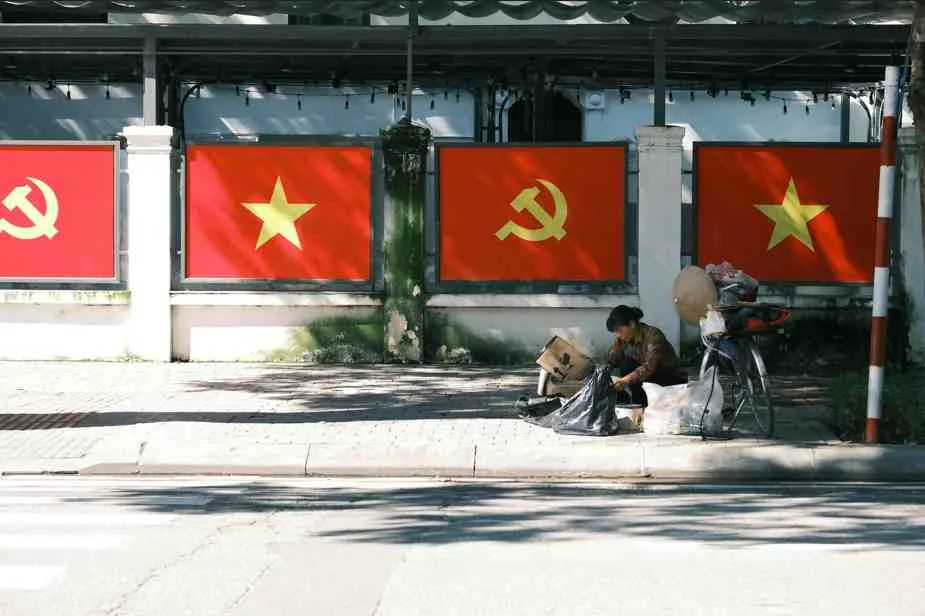
Communism is both an economic and political idea. At its core, it argues that the major means of production, such as factories, mines, and farms, should not be privately owned by a small class for profit. Instead, they should be owned collectively and used for the benefit of society as a whole. Britannica says communism seeks to create a classless society in which major productive resources are owned and controlled by the public.
In classic communist theory, society is supposed to move beyond class divisions. The long term ideal is often described as a classless and even stateless society where exploitation disappears and wealth is distributed according to need. Britannica’s overview of Marxian communism explains that Marx saw communism as the stage that would transcend capitalism and class conflict.
This is why discussions of communism can become confusing. The theory and the historical states that called themselves communist are not always the same thing. Some people defend communism as a moral ideal of equality and collective ownership, while others judge it mainly through the record of centrally planned communist governments.
The Most Important Difference
The biggest difference between communism and capitalism is ownership. In capitalism, productive assets are mainly privately owned. In communism, major productive assets are meant to be collectively owned or controlled for society rather than private profit. That ownership difference changes almost everything else, including incentives, power, income distribution, and the role of the state.
This is why the debate is not only about money. It is really about who controls the economy and for what purpose that control is used. In capitalism, owners and firms usually make decisions in pursuit of profit. In communism, economic control is supposed to serve collective social goals rather than private return.
| Category | Capitalism | Communism |
|---|---|---|
| Ownership | Mainly private ownership | Collective or public ownership in theory |
| Main goal | Profit and market success | Equality and shared social benefit |
| Role of markets | Usually central | Usually limited or replaced by planning |
| Class structure | Class differences remain | Classless society is the ideal goal |
| Economic incentives | Private gain and competition | Collective need and planned allocation |
How Capitalism Organizes the Economy
In capitalism, producers decide what to make based on demand, prices, expected profit, and competition. If consumers want more of something, firms have a reason to produce more of it. If a business fails to attract buyers, it may shrink or disappear. This decentralized market coordination is one of capitalism’s defining features.
This gives a lot of power to dispersed decision making. Millions of consumers, workers, and firms make choices every day, and the market helps coordinate those choices through prices. Supporters see this as more flexible and more responsive than centralized planning because no single authority has to direct the whole economy.
However, this also means outcomes can be unequal. A profitable business may thrive even if it serves luxury demand, while important but less profitable social needs may remain underprovided unless the state or civil society steps in. That tension is one of the main criticisms of capitalism.
How Communism Organizes the Economy
In communist theory, production is meant to be organized around social need rather than profit. If society needs housing, food, transport, or health care, those things should be produced because they are needed, not because they deliver private returns to owners. This is the central moral promise of communist thought.
In practice, communist states often used central planning. State authorities decided what should be produced, how much should be produced, where resources should go, and how goods should be distributed. Stanford’s overview of markets notes that command economy communism was historically presented as the main alternative to market economies.
Supporters see this as a way to reduce wasteful competition and prevent basic social goods from depending on private profit. Critics argue that central planning often struggles with information, efficiency, innovation, and freedom of choice. Those criticisms became especially strong after the experience of twentieth century command economies.

Capitalism and Incentives
One major strength of capitalism is its incentive structure. People can start businesses, invest, invent, and work toward higher income or profit. Many supporters argue that this creates strong motivation for risk taking, productivity, and innovation. Financial markets and market institutions are often praised for helping coordinate saving, investment, and business growth.
When firms compete, they often try to improve products, lower costs, and respond quickly to consumer demand. This can create rapid economic change and technological progress. Supporters of capitalism often point to this dynamism as one of the system’s biggest advantages.
However, the same incentive system can also encourage selfish behavior, monopoly power, labor exploitation, or the neglect of social needs that do not generate enough profit. This is where capitalist strengths and capitalist criticisms often meet in the same argument.
Communism and Incentives
Communism tries to reduce the role of private profit as the main driver of economic life. The idea is that people should produce as part of a shared social system rather than mainly competing for personal economic gain. Supporters argue that this can reduce exploitation and make it easier to guarantee basic needs for everyone.
Critics respond that weaker private incentives can reduce innovation, efficiency, and effort. If rewards are less closely tied to performance, some argue that productivity may fall and economic dynamism may weaken. This criticism has been one of the most persistent objections to centrally planned systems.
This does not mean the debate is only about greed versus equality. It is really about what kind of motivations and institutions are most effective and most just in organizing economic life. That is why the argument remains powerful even today.
Capitalism and Inequality
Capitalism often generates inequality because some people own more capital, build larger businesses, or gain much higher incomes than others. Wealth can accumulate across generations, especially when successful firms, families, and investors reinforce their advantages over time. Critics argue this can distort social mobility and political power.
Supporters of capitalism often reply that some inequality is acceptable if the system creates growth, opportunity, and rising living standards overall. In that view, the key question is not whether everyone ends with the same outcome, but whether people have room to improve their condition through work, skill, or enterprise.
Critics answer that capitalist inequality can become so large that formal freedom loses meaning for many people. If housing, health care, education, and stable work are deeply unequal, then market freedom alone may not feel like real freedom.
Communism and Equality
Communism places much greater emphasis on equality. The goal is to reduce or eliminate class divisions and stop a small owning class from dominating economic life. This is one reason communist ideas historically appealed in societies marked by deep poverty, labor exploitation, or extreme class hierarchy.
Supporters argue that this makes communism morally attractive because it challenges the idea that a small group should control the economic foundations of society. They also argue that basic goods such as housing, health care, and education should not depend mainly on private wealth.
Critics point out that some communist states reduced economic inequality while still creating strong political inequality, where party elites and state officials held extraordinary power over ordinary citizens. So equality in ownership did not always lead to equality in power.
| Issue | Capitalism | Communism |
|---|---|---|
| Innovation | Often strong due to competition and profit incentives | Can be weaker if incentives are less dynamic |
| Equality | Often produces larger income and wealth gaps | Aims for stronger equality in distribution |
| Choice | Usually wider consumer and business choice | Often narrower under centralized systems |
| Security | May be uneven without strong social protection | Often promises stronger universal basics |
Capitalism and Freedom
Supporters of capitalism often connect it to personal freedom. If people can own property, start businesses, choose jobs, invest, and buy what they want, they may see this as a form of economic liberty. Capitalism is often defended as a system that spreads decision making across millions of people instead of concentrating it in one planner or ministry.
However, critics argue that formal freedom inside capitalism can be limited by material inequality. A poor person may be legally free in theory, but still lack meaningful power to shape life if education, housing, and health care remain insecure. This is where critics say market freedom alone is not enough.
So the freedom question depends on what kind of freedom you emphasize. Capitalism is strong on market choice and private initiative, but critics say it can be weaker on equal access to the conditions that make freedom substantive.
Communism and Freedom
Supporters of communism sometimes argue that real freedom means freedom from exploitation, hunger, unemployment, and domination by private capital. In that sense, they say communism seeks a deeper social freedom than simple market choice.
Critics respond that communist states often restricted speech, political opposition, civil liberties, and private decision making. That is why many people associate historical communism less with freedom and more with concentrated state power. The historical record of command economies is one reason the debate remains so sharp.
This creates one of the biggest moral disagreements in the whole discussion. Is freedom mainly about property and choice, or about equality and security. Different answers lead people toward very different economic systems.
Real World Capitalist Systems
Very few capitalist countries are purely laissez faire. Most modern capitalist systems mix markets with regulation, labor law, welfare programs, public services, and monetary management. The Great Depression and later crises pushed many countries away from pure hands off capitalism and toward mixed market institutions. Britannica notes that laissez faire capitalism effectively ended in many countries after the Great Depression.
This matters because many debates about capitalism are really debates about what kind of capitalism people want. Some favor lighter regulation and lower taxes. Others support a stronger welfare state inside a capitalist system. Both may still be capitalist because private ownership remains central.
So when judging capitalism, it helps to distinguish between pure theory and actual mixed economies. Real world capitalism usually operates with both markets and state institutions rather than one alone.
Real World Communist Systems
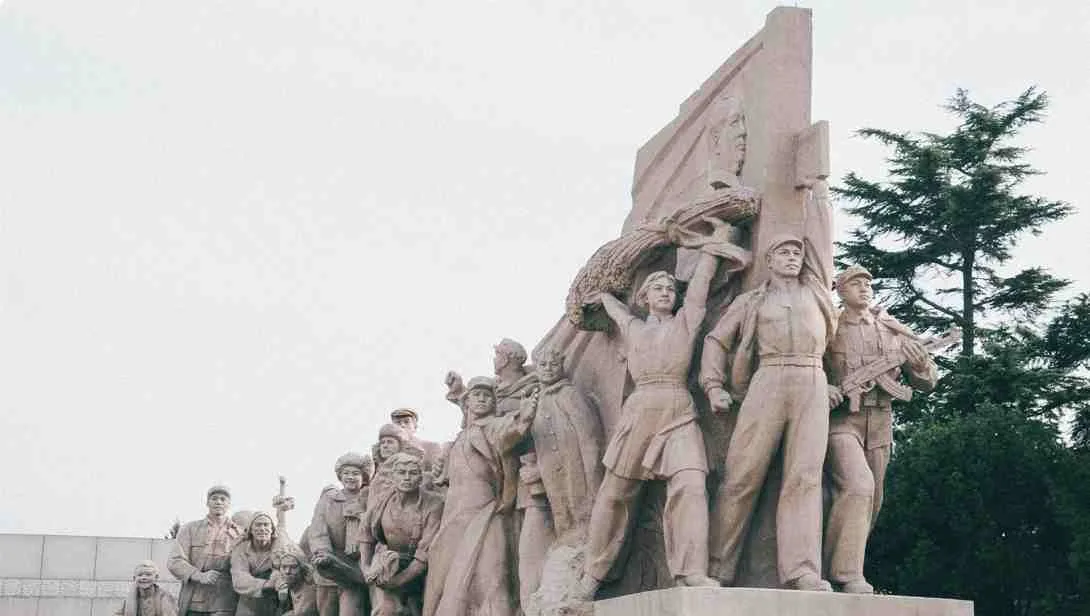
Very few real world systems fully matched the classless, stateless communist ideal described in theory. Instead, countries that called themselves communist often created centralized party states with planned economies and strong administrative control over economic life. That gap between theory and historical implementation is one of the biggest issues in the debate.
This is why critics often judge communism by the historical experience of states such as the Soviet Union, Maoist China, or other command economies, while some defenders argue that these states never truly achieved communism as Marx imagined it. That disagreement remains central to modern discussions.
Whether one accepts that defense or not, it is important to keep the distinction clear. Communist theory and communist state practice are related, but they are not identical.
Strengths of Capitalism
Capitalism is often praised for innovation, adaptability, strong incentives, consumer choice, and high productivity. It tends to reward experimentation and can generate large amounts of wealth and technological progress under the right institutional conditions.
It can also respond quickly to changing demand because firms constantly seek advantage in the market. This flexibility is one reason capitalist economies are often associated with entrepreneurship and rapid adjustment.
For many people, its biggest strength is that no single planner has to control the whole economy. Decisions are spread across many actors, which can make the system dynamic and decentralized.
Weaknesses of Capitalism
The main weaknesses often include inequality, instability, boom and bust cycles, labor exploitation, and the tendency for profit to outweigh some social needs. Without strong institutions, capitalism can produce harsh outcomes for weaker groups and regions.
Critics also argue that capitalism can encourage monopoly power, financial excess, and environmental damage when profit seeking is poorly constrained. That is why many modern capitalist societies rely on antitrust law, environmental rules, labor protections, and welfare systems.
So while capitalism can be highly productive, it can also be highly unequal and disruptive without balancing institutions. This is one reason mixed economies became the dominant real world form of capitalism.
Strengths of Communism
Communism is often praised for its moral emphasis on equality, shared ownership, and protection against class exploitation. In theory, it aims to guarantee that basic life conditions are not left to private wealth alone. That ethical appeal has remained powerful even among people who do not support historical communist states.
Supporters may argue that a system organized around need can create stronger universal access to essentials like education, housing, health care, and work. It also directly challenges the idea that a small owning class should dominate economic life.
Its biggest attraction is often not market efficiency but social justice. It asks whether a society should tolerate deep economic hierarchy and profit driven control over basic human needs.
Weaknesses of Communism
The main weaknesses often raised are weak incentives, planning difficulties, reduced consumer choice, concentration of political power, and historical tendencies toward state repression. Critics argue that when central authorities control too much, the economy loses flexibility and society loses liberty.
Instead of ending domination, some critics say communist systems simply shift power from private owners to party elites and administrative hierarchies. This criticism has been central to anti communist arguments for decades.
This is why many people see the historical record of communist states as a warning about concentrated state control, even if they still sympathize with the moral critique of capitalism.

Why the Debate Still Matters
The debate still matters because modern societies still struggle with inequality, labor power, housing, health care, public ownership, privatization, and the role of profit in basic life. Even when countries are not choosing between pure communism and pure capitalism, they are often deciding how much market control and how much collective provision they want.
This means the debate is not dead history. It continues in arguments about welfare states, labor rights, taxation, public services, industrial policy, and corporate power. Many current political disagreements are really arguments about how far capitalist societies should go in correcting market inequality and failure.
That is why learning the difference between communism and capitalism is still useful. It helps make sense of modern arguments about ownership, regulation, inequality, and freedom.
Simple Way to Remember the Difference
If you want an easy memory line, use this. Capitalism puts private ownership and profit at the center. Communism puts common ownership and equality at the center. That short line is not the whole story, but it captures the main contrast well enough to build from.
Then add the second layer. Capitalism usually works mainly through markets and competition, while communism usually works through collective control and planned distribution. Once you remember ownership and coordination, the rest of the comparison becomes much easier.
Conclusion
Communism versus capitalism is really a debate about ownership, power, incentives, equality, and freedom. Capitalism is built mainly around private property, markets, and profit. Communism is built around shared ownership, class equality, and production for social need. Each system claims to solve major human problems, and each has powerful critics for the problems it creates.
The best way to understand the difference is not to reduce either one to a slogan. Look at who owns the economy, how decisions are made, what motivates production, and how wealth and power are distributed. Once you ask those questions, the contrast becomes much clearer and much more meaningful.