
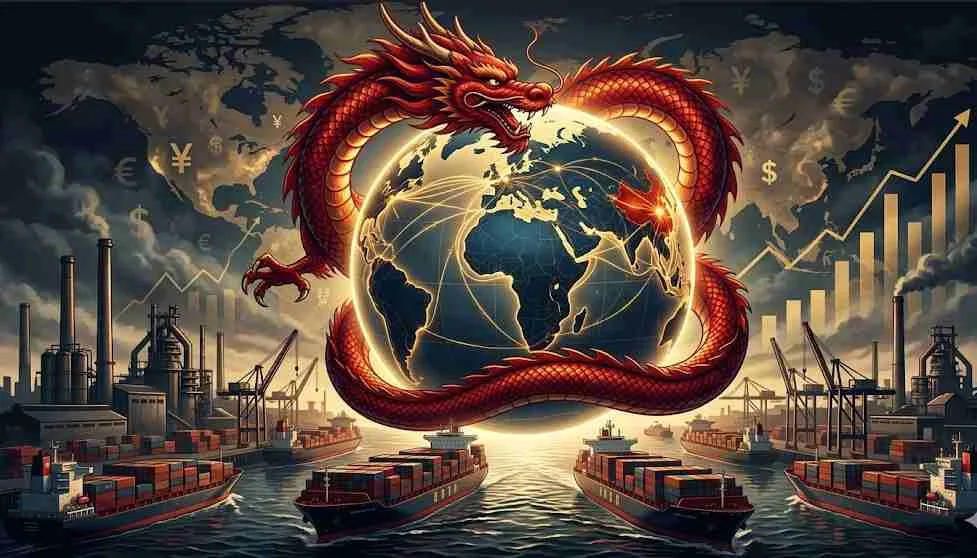


China is not a mercantilist empire in the old colonial sense, but many analysts do see strong mercantilist features in its modern economic strategy. Those features include heavy state support for targeted industries, export oriented industrial policy, large scale overseas infrastructure finance, and strategic use of trade and investment relationships. However, the empire label is still debated because China also operates inside global markets, faces domestic economic pressures, and does not fit neatly into one historical category.
The most useful way to think about this is not to ask whether China perfectly matches an old textbook model. The better question is whether China is using state directed economic power in ways that resemble a modern form of mercantilism. That is where the debate becomes much more interesting.
What Mercantilism Means First
Mercantilism usually refers to an older economic idea in which the state tries to build national power by promoting exports, restricting dependence, accumulating strategic advantage, and shaping trade in ways that strengthen the nation over rivals. In classic history, it was often tied to empire, colonial extraction, and state backed commercial expansion.
Today, people use the word more loosely. They usually mean a system where the government actively supports domestic champions, uses industrial subsidies, protects or directs strategic sectors, and treats trade less as a neutral market exchange and more as a tool of national power. That is the modern version many critics see when they talk about China.
So the real issue is not whether China is copying the seventeenth century exactly. The issue is whether China uses state power to shape economic outcomes in a way that looks strategically mercantilist.
Why People Call China Mercantilist
The label comes mostly from how China blends markets with heavy state direction. The WTO’s 2025 Global Value Chain Development Report highlights China’s expanding use of industrial subsidies, especially after Made in China 2025, and notes how domestic support policies shape production and export structures. That is one of the clearest reasons critics see a mercantilist pattern.
The WTO trade policy review summary on China also notes that manufactured goods make up more than 95 percent of China’s exports and identifies Made in China 2025 as the main program promoting the manufacturing sector, which receives grants, research funding, and tax incentives. That kind of targeted state support looks very different from a hands off free market model.
Critics also point to the role of the state and Communist Party inside the economy. A Peterson Institute paper by Alan Wolff says China uses trade measures for coercive purposes and increases the role of the state and the party in the economy while denying that market forces should govern competitive outcomes. That language fits closely with the idea of a strategic, state steered system rather than a neutral market one.
Industrial Policy Is a Big Part of the Argument
If there is one area where the mercantilist argument becomes strongest, it is industrial policy. China does not simply wait for market forces to decide which sectors matter most. It has repeatedly targeted advanced manufacturing, technology, clean energy, and other strategic sectors for policy support. The WTO’s 2025 report explicitly uses China’s expanding industrial subsidies as a central example of how domestic support now shapes global production and export patterns.
Supporters of China’s approach would say this is smart development strategy, not mercantilism. They would argue that every major power uses industrial policy in some form, especially in a more contested global economy. In fact, the WTO’s 2025 report is broader than China alone and shows that strategic industrial policy is now a global trend, not something unique to Beijing.
Still, the scale and consistency of China’s state support is one reason the mercantilist label keeps returning. The debate is not really about whether China uses industrial policy. It clearly does. The debate is whether that policy is so strategic and state powered that mercantilism is the right name for it.
Exports, Overcapacity, and Global Tension
Another major part of the debate is export pressure and overcapacity. When a country strongly supports domestic production in strategic sectors, the result can be excess output that then moves aggressively into foreign markets. That creates tension because other countries may view those exports not as ordinary competition but as state shaped competition.
The IMF’s 2026 Article IV consultation for China says net exports contributed 1.6 percentage points to annual growth in 2025, above the recent prior average. That does not prove mercantilism by itself, but it does show how important the external sector remained in China’s recent growth picture.
In many countries, especially when local industries feel squeezed, that export strength gets interpreted as evidence that China’s domestic economic model pushes costs outward. That is one reason trade friction with China often becomes a fight over industrial systems, not only tariffs.
| Feature | Why critics call it mercantilist | Why others push back |
|---|---|---|
| Industrial subsidies | State shapes winners and export power | Many countries now use industrial policy too |
| Export strength | Looks like state backed global market pressure | China is also a huge consumer and importer |
| Belt and Road finance | Can extend influence through infrastructure and debt | Also provides real infrastructure in unmet markets |
| Party and state role | Market outcomes are not fully market driven | Hybrid systems do not fit simple historical labels |
Does Belt and Road Make China Look Imperial
This is where the empire language usually enters. The Belt and Road Initiative is often described as a major channel for China’s overseas economic reach. CFR says BRI is China’s massive global infrastructure initiative and notes concerns about debt terms, strategic leverage, and opaque contracts in some projects.
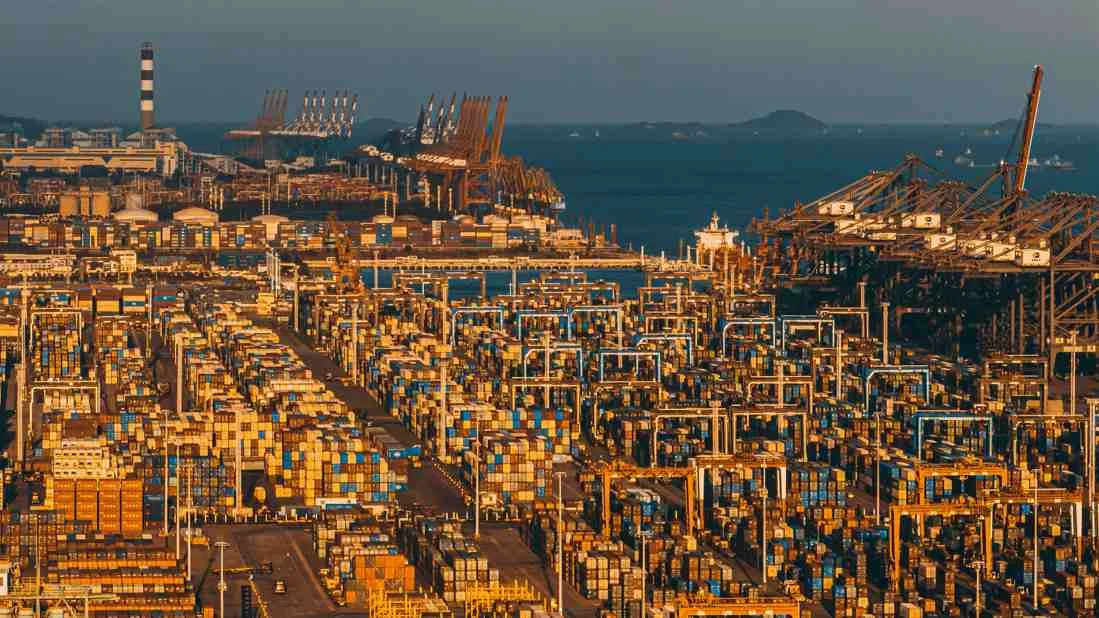
CSIS also describes China’s Maritime Silk Road and global port influence as part of a wider political economic infrastructure strategy that can challenge existing trade patterns and increase Beijing’s strategic reach. That makes the initiative look larger than ordinary overseas investment.
However, calling this an empire needs care. China is not formally colonizing countries in the old European sense. It is usually working through loans, construction contracts, ownership stakes, influence over standards, and access relationships. So the stronger argument is not that China is recreating a classic empire exactly. It is that it may be building a modern network of influence through economic tools that can, in some cases, resemble imperial leverage without formal empire.
Why Some Experts Reject the Empire Label
The empire label can go too far if it turns China into a cartoon. China still operates inside a deeply interconnected global economy. It depends on export markets, imported inputs, foreign demand, and access to technology and capital channels, even as those relationships become more contested. The IMF’s 2026 consultation also shows China dealing with domestic growth pressures, weak demand at home, and the need for broader structural reform. That does not look like an all powerful empire moving without constraint.
Brookings also argued years ago that China’s development path complicated neoliberal expectations because it mixed market reforms with strong state direction rather than following one clean ideological script. That is still useful here. China may be better understood as a hybrid state capitalist system with mercantilist features rather than a simple one word category.
In other words, critics are right to notice strategic state behavior, but the strongest analysis usually avoids turning that into an overly neat empire story. China is powerful, but it is also constrained, internally uneven, and tied to a wider system it does not fully control.
What Makes China Different From Classic Mercantilist Empires
Classic mercantilist empires often relied on formal colonial rule, direct extraction, protected imperial trading systems, and explicit metropolitan control over overseas territories. China’s current model does not usually work like that. It uses state backed companies, financing arrangements, infrastructure building, trade dependence, industrial policy, and technological ambition instead.
That difference matters because history should not be flattened too much. China may pursue strategic advantage through economics, but it often does so through contracts, networks, and institutions rather than direct colonial administration. That makes it more accurate to talk about modern mercantilist features than to claim it is simply a replay of old European empire.
So if the question is whether China is literally a new mercantilist empire in the classic sense, the answer is no. If the question is whether China uses a modern form of state driven economic power that looks mercantilist in important ways, many analysts would say yes.
How Trade, Technology, and Security Now Blend Together
One reason this debate has intensified is that trade policy no longer looks separate from security policy. Strategic sectors like semiconductors, batteries, telecom equipment, ports, clean energy, and digital platforms are now viewed through both economic and geopolitical lenses. The WTO’s 2025 report stresses that domestic industrial support now shapes global value chains in a more strategically contested economy.
That matters because a country can appear more mercantilist when trade is no longer just trade. If industrial capacity also affects military power, technological dependence, data control, or geopolitical leverage, then state support starts to look more like a national power strategy than ordinary development policy.
China is not alone in this shift, but it is one of the clearest and biggest examples of it. That is why the mercantilist label keeps coming back even as other major economies also revive industrial policy.
What the Strongest Balanced Answer Looks Like
The strongest balanced answer is not “yes, absolutely” or “no, not at all.” It is something more careful. China clearly uses state power in ways that fit modern mercantilist analysis. Industrial subsidies, export promotion, strategic sectors, overseas infrastructure influence, and the strong party state role all support that argument.
At the same time, the empire label can mislead if it suggests simple colonial repetition or total Chinese control over the global economy. China is still embedded in global markets, still exposed to external demand and domestic weakness, and still operating through a mixed model rather than a single old doctrine.
So the most honest answer is that China looks like a major state capitalist power with strong mercantilist features and growing network based global influence, but the word empire should be used carefully and analytically, not just rhetorically.
| Question | Best balanced answer |
|---|---|
| Is China strongly state directed economically | Yes, especially in strategic sectors |
| Does China use industrial subsidies and export support | Yes, multiple major sources say it does |
| Does China use overseas finance for influence | Yes, Belt and Road is central to that debate |
| Is China a classic colonial empire | No, not in the old formal sense |
| Does modern mercantilism describe part of China’s model | Yes, many analysts think it does |
Conclusion
Is China the new mercantilist empire. The cleanest answer is that China is not a classic empire in the old colonial sense, but it does show many features that analysts associate with modern mercantilism. Its use of industrial subsidies, strategic export capacity, state direction, party influence in the economy, and overseas infrastructure finance all support that reading.
At the same time, the label becomes less useful when it turns into a slogan instead of an analysis. China is still a hybrid system with real domestic pressures and deep dependence on the wider global economy. The strongest conclusion is that China is best understood as a powerful state capitalist system with strong mercantilist features and expanding global influence, not as a simple copy of earlier empires.