

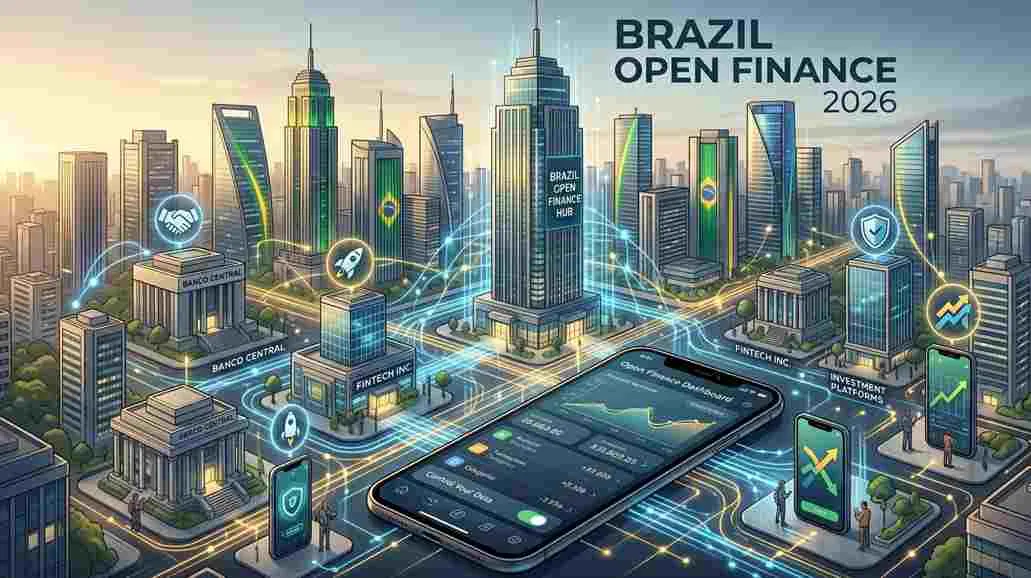



Brazil has become a major reference point in digital finance because its open finance system goes beyond basic banking data and aims to create a broader, more connected financial environment. That sounds exciting, but it also raises practical questions about growth, regulation, competition, and what all this means for regular users and businesses.
Open Finance in Brazil is a customer permission-based system that allows financial data and services to be shared across participating institutions in a more standardized way. In 2026, the big story is not that the system exists, but that it keeps expanding in scale, attracting new entrants, and pushing Brazil even further into the center of global fintech conversations.
Many people first hear about Open Finance Brazil through headlines, but the real value comes from understanding the bigger picture. This is not only a technology story. It is also a story about competition, customer control, digital payments, lending, and how financial services are becoming more connected across the Brazilian market. If you want to understand how digital tools are reshaping the finance space more broadly, our guide to crypto and fintech gives a useful starting point on how these technologies are changing money.
What Is Open Finance in Brazil?
Open Finance in Brazil is a regulated framework that allows customers to share financial data with authorized institutions when they give permission. This helps different financial providers interact more smoothly and can support better offers, easier comparisons, and more personalized services.
In simple terms, it moves control closer to the customer. Instead of your financial history being trapped inside one bank, the system allows data sharing across participating institutions in a structured and standardized way. This can help people access better products and can also help smaller players compete with larger financial institutions.
Brazil's Central Bank presents Open Finance as a way to enhance efficiency in credit and payments while promoting a more inclusive and competitive financial system. That goal helps explain why Brazil's model gets so much international attention. It is not just about modernizing banks. It is about changing how the financial system works for users. Banco Central do Brasil Open Finance
Why Open Finance Brazil Keeps Making News
Brazil keeps appearing in fintech and finance news because its system is large, active, and still evolving. It is no longer just a pilot idea or a regulatory promise. It has become a live infrastructure layer that more institutions want to use, build on, or enter.
Recent 2026 reporting also shows that Brazil's financial ecosystem remains attractive to global platforms. For example, Reuters reported that TikTok sought Brazilian central bank licenses related to payments and direct credit, which signals how seriously major digital players view Brazil's fintech opportunity. That matters because open finance becomes even more important when new platforms want to connect finance with commerce, payments, and app-based user journeys.
Industry reporting in early 2026 also highlighted Brazil's scale, including reports that the ecosystem reached 128 million active consents. Even though different trackers may define metrics slightly differently, the broad message is clear. Brazil is operating at a level of adoption that keeps it in the global spotlight.
Understanding how fintech innovation connects with investment and funding is just as important as understanding the regulation. Our guide on startup funding rounds and investors explains how capital flows into fintech companies — including those building on top of open finance infrastructure.
Open Banking vs Open Finance in Brazil
Many people still use the phrase open banking, but Brazil's system moved beyond that narrower idea. Open banking mainly focuses on banking data and services. Open finance is broader. It covers a larger financial ecosystem and reflects a more ambitious vision.
This matters because it changes the scope of innovation. When a country moves from open banking to open finance, it is not only improving bank account portability or payment initiation. It is building a wider environment for financial interaction, product comparison, and service design across different parts of finance.
That broader model is one reason Brazil gets discussed so often in international policy and fintech circles. It is not simply following an old template. It is pushing toward a more comprehensive version of financial data sharing.
| Term | Main focus | Why it matters |
|---|---|---|
| Open Banking | Bank account data and basic banking services | Improves competition between banks |
| Open Finance | Broader financial data and service integration | Creates a wider digital finance ecosystem |
Latest Open Finance Brazil News in 2026
The biggest 2026 theme is expansion with real commercial relevance. Open Finance in Brazil is no longer only about technical rollout. It is increasingly tied to competition, embedded finance, user acquisition, and strategic moves by both local and global companies.
One of the clearest examples is fresh fintech interest from major platforms. Reuters reported in March 2026 that TikTok sought two Brazilian licenses, one for electronic money issuance and another for direct credit operations. Even though that story is not only about Open Finance, it connects strongly to the same digital finance environment. Brazil's growing financial infrastructure is part of what makes the market so attractive.
Another important 2026 thread is scale. Industry reporting early in the year pointed to 128 million active consents, reinforcing the idea that Brazil is not only experimenting with open finance but operating at a globally leading scale. That kind of number matters because scale changes what businesses can build on top of the system.
At a broader policy level, a recent BIS paper also described open finance as transforming financial systems in several jurisdictions, with Brazil often treated as one of the most visible real-world cases of strong adoption and ecosystem growth. This gives more weight to the idea that Brazil is not just an isolated success story. It is becoming a global reference model.
The fintech sector has also been shaped by regulatory changes around financial instruments. For context on how financial agreements and credit structures work in modern lending, see our guide on forward flow agreements for investors and lenders, which explains how credit portfolios are traded — a model increasingly common in open finance ecosystems.
What This Means for Consumers in Brazil
For consumers, the promise of open finance is more control and more choice. In theory, people can use consent-driven data sharing to access better products, easier onboarding, and more personalized financial services. That could include loans, payments, budgeting tools, and other digital services that work more smoothly across institutions.
The biggest consumer benefit is not just convenience. It is negotiating power. When your financial data can be shared safely with your permission, more institutions may be able to compete for your business. That can lead to better rates, smarter offers, and less dependence on one bank relationship.
However, consumers also need clarity. Open finance only works well when people understand consent, trust the process, and know who is accessing their information. Growth is a good sign, but long-term trust is even more important than raw adoption numbers. For consumers managing their money across multiple products, our overview of top free personal finance software can help you track and manage your financial life more effectively alongside these new tools.

What This Means for Banks and Fintechs
For banks, open finance creates both pressure and opportunity. The pressure comes from competition. Large institutions can no longer assume customer data stays locked inside their own walls. If customers can share information more easily, rivals can build better offers and win them away.
The opportunity is just as important. Institutions that adapt well can use open finance to create better customer journeys, smarter credit models, and faster digital services. In other words, the system does not only threaten old players. It rewards the ones that move well.
For fintechs, this environment is often even more exciting. Open finance can lower barriers that once made it hard to compete with established banks. A smaller player with strong technology, strong design, and a clear customer problem can build compelling experiences more quickly inside a connected ecosystem. Understanding how credit products work is key — our guide on credit card interest rates explains how lenders price credit risk, which is directly relevant to how open finance reshapes lending competition.
If you want to understand the business side of how companies manage money and financial operations inside modern digital systems, a useful internal read here is define cash management services. It fits naturally because open finance often becomes more valuable when financial operations are cleaner and more connected.
Why Consent Matters So Much in Open Finance
Consent is the foundation of the whole system. Open finance is not supposed to mean free access to your financial life. It is supposed to mean that you decide when your data is shared, with whom, and for what purpose.
This is why active consents are such an important metric in Brazil news coverage. They show that the ecosystem is not just technically available. They show real customer permission-based participation. That is very different from a system that exists only on paper.
Still, more adoption always creates a bigger need for transparency. As the ecosystem grows, institutions need to make consent flows clear, understandable, and easy to manage. Complexity can weaken trust faster than technical failure. For a broader look at how digital security and personal data interact with finance and technology, our paper wallet guide covers how physical and digital asset security work — a reminder that keeping financial data safe is a theme across all fintech innovation.
Why Open Finance Matters for Competition in Brazil
Brazil has long been a fascinating market for digital financial change. Large incumbents matter, but so do challengers, digital banks, and increasingly ambitious fintech and platform players. Open finance sits in the middle of that tension.
When data portability improves, competition can become more practical instead of theoretical. It becomes easier for a customer to compare products, easier for a provider to assess risk with permissioned data, and easier for newer players to build relevant offers. That makes the market more dynamic.
This competition story is one reason international observers keep watching Brazil. Open finance is not only a compliance exercise there. It is becoming part of the country's larger digital finance identity. Investors tracking fintech growth often use financial benchmarking tools to evaluate market performance — our guide to mutual fund indexation explains one such framework that helps investors measure returns in a structured way.
| Stakeholder | Main opportunity | Main challenge |
|---|---|---|
| Consumers | Better offers and more control | Understanding consent and data use |
| Banks | Better products and retention tools | More competition and less data lock-in |
| Fintechs | Faster innovation and better access | Scaling trust, compliance, and infrastructure |
| Regulators | More efficient and inclusive markets | Keeping security and governance strong |
How Open Finance Connects to Brazil's Bigger Fintech Story
Open finance does not exist alone. It sits inside a bigger Brazilian fintech story that includes digital banking, instant payments, embedded finance, credit innovation, and strong regulatory involvement. That broader context helps explain why the topic keeps producing newsworthy developments.
Brazil's digital finance landscape has become one of the most closely watched in the world because different layers of innovation keep reinforcing each other. When payments improve, data sharing becomes more valuable. When data sharing improves, credit and personalization can improve too. When all of that happens in a large market, the result draws global attention.
That is why open finance Brazil news is rarely only about one API or one rule change. It is usually part of a much larger shift in how finance, technology, and platform ecosystems are developing together. Trading and investment tools also benefit from cleaner financial infrastructure — our guide on forex trading framework guidelines shows how structured, rule-based approaches to financial markets reflect the same demand for transparency and consistency that drives open finance policy.
If your audience also cares about how digital growth strategies shape financial products and user experiences, a relevant read here is professional digital solutions. It fits because strong digital execution matters when fintechs try to turn infrastructure into actual customer value.
Challenges Open Finance Brazil Still Faces
Even strong momentum does not remove the hard parts. Open finance in Brazil still faces familiar challenges such as user education, security expectations, technical integration quality, and the need to turn infrastructure into clear customer value.
One challenge is that scale alone does not guarantee simplicity. A large ecosystem can still confuse users if consent management, interfaces, and communication are weak. The system has to feel useful, not only impressive.
Another challenge is commercial discipline. Many companies want to talk about open finance, but not all of them build products that genuinely improve people's financial lives. Real adoption grows when the use case feels obvious, fast, and trustworthy. For consumers navigating complex financial products, understanding cost structures — like how credit is priced — is essential. Our guide on balloon loan calculators is a practical example of how financial tools can help people make clearer decisions.
What to Watch Next in Open Finance Brazil News
The next phase of attention will likely focus less on whether Brazil has an open finance system and more on what businesses actually do with it. That means product launches, credit use cases, embedded payment journeys, cross-platform integrations, and new entrant strategies may become even more important in the headlines.
It is also worth watching how large digital platforms behave in Brazil. When companies with huge audiences seek payments or credit licenses, they can reshape competitive pressure very quickly. Open finance does not cause every move directly, but it helps create the kind of connected environment where those moves become more powerful.
Finally, the global comparison angle will probably stay strong. Brazil's ecosystem remains one of the most cited open finance cases in the world, so every major milestone there tends to matter beyond Brazil itself. For anyone tracking the broader fintech landscape, our roundup of best AI business tools in 2026 covers the technology layer that is increasingly powering financial products built on open finance infrastructure.
Conclusion
Open Finance Brazil news matters because Brazil is no longer just testing a bold financial idea. It is operating one of the most closely watched open finance ecosystems in the world. In 2026, the important story is continued expansion, rising commercial relevance, and stronger interest from both traditional institutions and newer digital players.
If you want the simple takeaway, here it is. Brazil's open finance story is now less about launch and more about scale, trust, competition, and what gets built next. That is why the headlines keep coming, and that is why this topic matters whether you are a consumer, fintech founder, investor, or simply someone trying to understand where digital finance is going next.