

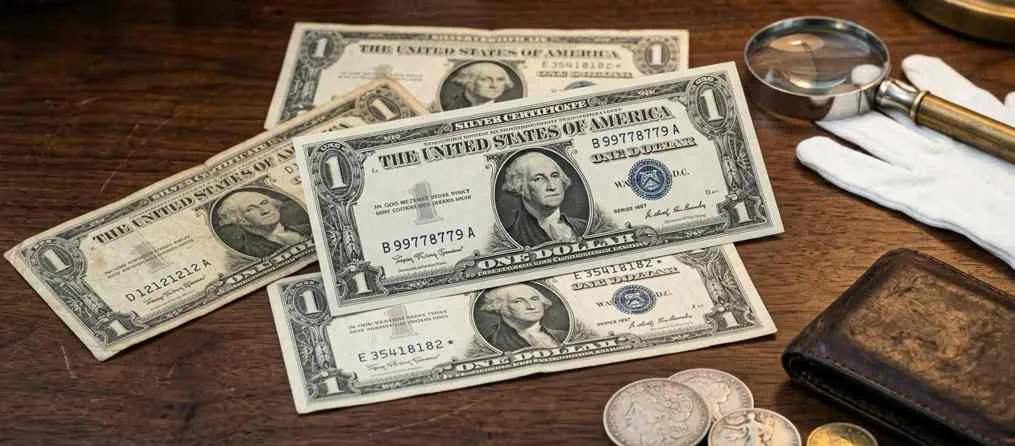



If you are searching for us 1 dollar silver certificate 1957, you are probably holding an old bill and wondering whether it is rare, valuable, or just a neat piece of American history. That is a smart question, because 1957 one dollar silver certificates are some of the most recognized old U.S. paper notes people still find in drawers, collections, and inherited boxes. They look special, they feel old, and they often make people wonder if they just found hidden treasure.
Quick answer. A 1957 one dollar silver certificate is a real and collectible piece of U.S. currency, but most ordinary circulated examples are not rare. In many cases, common notes are worth only a little more than face value, while crisp uncirculated notes, star notes, fancy serial numbers, and printing errors can be worth much more.
The good news is that even when a 1957 silver certificate is not worth a fortune, it is still a very interesting note. It represents an important part of U.S. currency history, and it remains one of the easiest entry points for new paper money collectors.
What Is a 1957 One Dollar Silver Certificate?
A 1957 one dollar silver certificate is a small size United States paper note that was issued during the silver certificate era. Silver certificates were special because they originally represented silver on deposit with the Treasury. In earlier decades, the holder could exchange the note for silver under the rules in place at the time.
The wording on the note is one of the things that makes it stand out from modern one dollar bills. It says that there is one dollar in silver payable to the bearer on demand. That language connects the note directly to the old silver backed money system and gives it a historical appeal that modern Federal Reserve Notes do not have.
Today, a 1957 silver certificate is still legal tender at face value, but collectors value it mostly for its history, condition, and collectible features rather than for spending power. That is why most people keep them instead of using them at a store.
Why the 1957 Silver Certificate Is So Famous?
The 1957 one dollar silver certificate is famous partly because many Americans have seen one. It is old enough to feel historic, but common enough that it still turns up in collections and family papers. For many people, it becomes the first old note they ever hold in their hands.
It is also notable because of the motto. The U.S. Currency Education Program says “In God We Trust” first appeared on banknotes on Series 1957 one dollar silver certificates. That gives the note an important place in currency history beyond just being an old silver certificate. U.S. Currency Education Program history
This combination of familiarity and historical importance is why the 1957 silver certificate remains such a popular search topic among collectors and casual finders alike.
Series 1957, 1957A, and 1957B, What Is the Difference
One thing that confuses many people is that not every 1957 silver certificate simply says “1957” in the same way. There are three main series versions that collectors usually talk about, Series 1957, Series 1957A, and Series 1957B.
The differences mostly involve signature combinations and series designations rather than a dramatic change in design. To a casual observer, the notes look very similar. To a collector, however, the specific series matters because value can vary slightly between them, especially when star notes or better condition are involved.
PCGS explains that these notes were printed in extremely large quantities across the 1957 dated series family. That is one major reason standard examples are collectible but not generally rare. PCGS 1957 $1 Silver Certificate guide
| Series | What collectors notice | General value pattern |
|---|---|---|
| 1957 | First main series in the group | Common in ordinary grades |
| 1957A | Different signature combination | Usually modest value unless high grade or special |
| 1957B | Later series in the group | Often similar value pattern to other common notes |
How Much Is a 1957 One Dollar Silver Certificate Worth
This is the question almost everyone asks first. The answer is simple but a little disappointing for some people. Most ordinary circulated 1957 one dollar silver certificates are not worth a huge amount. PCGS says common ungraded worn examples with no major damage are often worth around 1.50 to 2 dollars, while better examples can be worth more depending on grade and type.
PCGS also provides sample values showing that common non star notes in PCGS XF40 often sit around 5 dollars, while Choice Uncirculated examples can go higher, with the exact number depending on the series. These are estimate style guide numbers, not guaranteed selling prices, but they are useful for understanding the general range.
The biggest lesson is this. Most 1957 silver certificates are collected as affordable historic notes, not as major rarities. The real value jump happens when the note has better condition, a star, an unusual serial number, or a significant printing error.
Condition Is the Biggest Value Driver
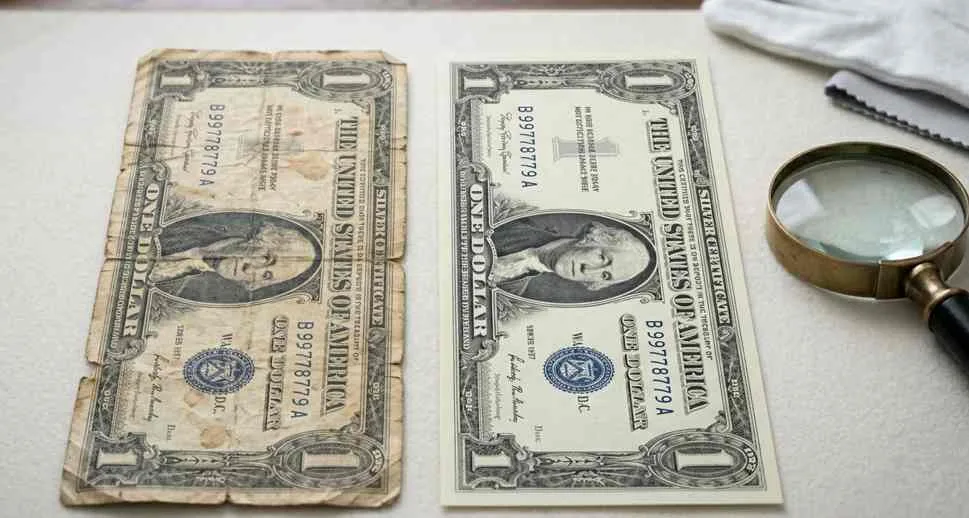
Condition matters more than most people expect. A heavily folded, stained, or torn note may have only a small premium over face value. A crisp, bright, sharply printed note with no folds can be much more desirable to collectors.
Collectors often use terms like circulated, extremely fine, about uncirculated, and uncirculated to describe condition. Grading companies like PCGS Banknote and PMG can certify a note and assign a professional grade. Once a note is certified, buyers usually feel more confident about both authenticity and condition.
This is why two 1957 silver certificates that look similar to a beginner can sell at very different prices. A note with strong paper quality, sharp corners, and better eye appeal often brings much more attention than one with soft paper and heavy wear.
What Is a Star Note and Why Does It Matter
A star note is a replacement note. These were printed to replace defective notes during production, and they can be identified by a star in the serial number. On 1957 one dollar silver certificates, star notes are much more interesting to many collectors than standard notes.
PCGS lists higher estimated values for star notes than for ordinary notes in comparable grades across the 1957 series family. That does not mean every star note is extremely valuable, but it does mean collectors usually pay more attention to them.
If you have a 1957 silver certificate and notice a star in the serial number, that is one of the first signs your note may deserve a closer look.
Fancy Serial Numbers and Errors Can Change Everything
Ordinary notes are common, but special notes are a different story. Fancy serial numbers can make a 1957 silver certificate far more desirable. Million serial numbers, repeaters, low numbers, solid numbers, radar numbers, and other eye catching patterns can create premiums far above normal catalog style values.
PMG has highlighted examples of 1957 and 1957A silver certificates with special serial number traits that sold for strong premiums. PMG also documents error notes involving mismatched serial numbers, offset printing, and multiple errors on 1957 series silver certificates. These kinds of notes are far from ordinary and can be worth dramatically more than a normal example.
This is why it is never enough to ask only what a 1957 silver certificate is worth in general. The note’s individual features matter a lot.
How to Tell If Your 1957 Silver Certificate Is Special
Start with the basics. Check the series, check whether there is a star in the serial number, and look closely at the overall condition. Then examine the serial number for unusual patterns and inspect the printing for mismatches, missing elements, or strange alignment issues.
Next, look for damage versus true printing errors. A fold, stain, or tear from use is not the same as an actual production error. Real errors usually show something that happened during printing or numbering, not something that happened later in circulation.
If the note looks unusually crisp or has a clear special feature, it may be worth submitting to a grading service or showing to a reputable paper money dealer before assuming it is common.
| Feature to check | Why it matters | Possible effect on value |
|---|---|---|
| Condition | Most important basic value factor | Higher grade often means much higher value |
| Star in serial number | Replacement note | Usually worth more than common notes |
| Fancy serial number | Collector appeal | Can create strong premiums |
| Printing error | Unusual production mistake | Can increase value dramatically |
| Professional grading | Adds market confidence | Can help selling and valuation |
History Behind the 1957 Silver Certificate
Silver certificates were part of an earlier U.S. currency system tied to silver redemption. Over time, rising silver prices and changing monetary policy made the old redemption system less practical. PCGS notes that production of silver certificates was abolished in 1963, and later redemption for silver bullion ended in 1968.
That context makes the 1957 issue especially interesting. It was one of the last one dollar silver certificate groups and sits near the end of that long chapter in American money history. That gives it historical importance even when an individual note is not rare.
For many collectors, the appeal is partly historical and partly visual. The blue Treasury seal and blue serial numbers make the note stand out immediately from modern one dollar bills.
Should You Spend or Keep a 1957 Silver Certificate
Technically, you could spend it at face value because it remains legal tender. However, that is almost never the smart move. Even common notes usually carry at least some collector interest, and unusual notes may be worth much more than one dollar.
If the note is heavily worn and common, the financial difference may be small, but it still makes more sense to keep it or sell it to a collector than to hand it over in everyday circulation. Once a collectible note disappears back into general use, it becomes much easier for its extra value to get lost.
So the practical answer is simple. Keep it until you understand what you have.
Where to Sell a 1957 One Dollar Silver Certificate
If you decide to sell, the best place depends on the note’s quality. Common circulated notes may sell through local coin shops, paper money dealers, coin shows, or online marketplaces. Better notes often do better through graded sales, specialized auction platforms, or direct collector channels.
If your note appears to be a star note, a fancy serial number, or an error, getting a professional opinion first is a smart move. Selling too quickly without understanding those features can leave money on the table.
Condition, presentation, and trust all matter in paper money sales. A certified note often attracts more serious buyers than an uncertified note, especially in the higher value range.
Common Mistakes People Make
One common mistake is assuming every old silver certificate is rare. The 1957 family was printed in enormous quantities, so age alone does not make the note valuable. Another mistake is ignoring condition. A worn example and a crisp uncirculated example can live in very different price worlds.
A third mistake is missing the star or overlooking a fancy serial number. Many people look only at the date and never examine the serial number closely. A fourth mistake is confusing damage with real errors. True errors are collectible. Ordinary damage usually lowers value.
The best approach is patient and simple. Look carefully, compare features, and do not rush to sell before you know the basics.
Conclusion
The us 1 dollar silver certificate 1957 is one of the most popular old U.S. notes people still find today. Most standard circulated examples are not rare and are usually worth only a modest premium over face value. However, high grade notes, star notes, fancy serial numbers, and genuine errors can be much more valuable and much more interesting to collectors.
The smartest next step is to check your note carefully before doing anything else. Look at the series, look for a star, inspect the serial number, and judge the condition honestly. Even when the note is not a jackpot, it is still a real piece of American currency history, and that alone makes it worth understanding before you decide what to do with it.