
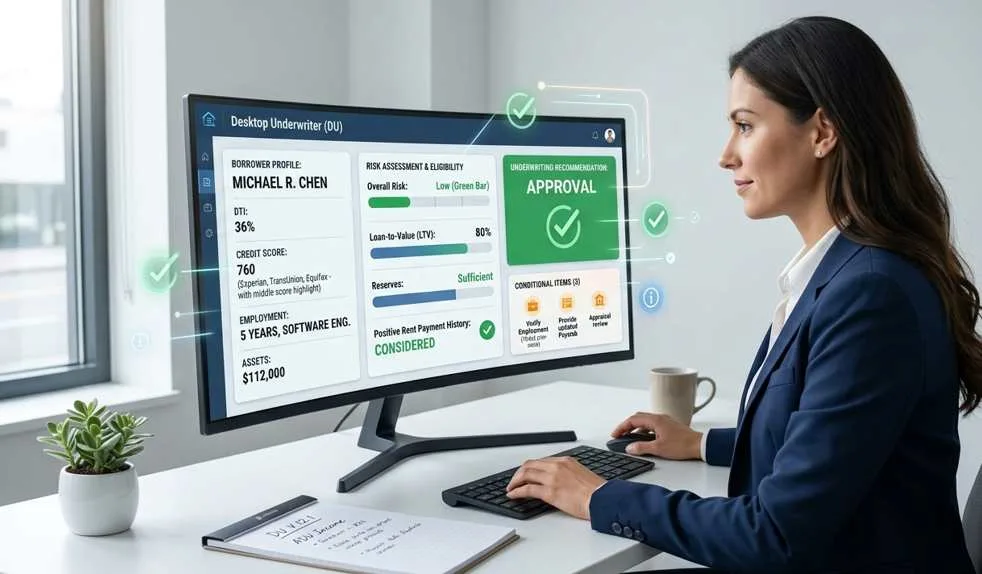



Desktop Underwriter, often called DU, is Fannie Mae’s automated mortgage underwriting system. Lenders use it to assess loan risk, evaluate borrower information, and determine whether a mortgage loan appears eligible for sale to Fannie Mae, along with what documentation may be needed. It does not replace the lender completely, but it plays a major role in the underwriting process.
A lot of people think mortgage approval is fully manual. However, modern underwriting often starts with powerful automated systems. Desktop Underwriter is one of the biggest names in that world, and understanding it helps you better understand how mortgage decisions are made.
What Is Desktop Underwriter?
Desktop Underwriter is an automated underwriting system created by Fannie Mae. It is commonly called DU. Lenders use it to review loan applications, measure credit risk, and help determine whether a mortgage loan meets Fannie Mae eligibility standards.
In simple terms, DU takes borrower and loan information, runs it through Fannie Mae’s risk assessment system, and returns findings that help the lender understand the file better. Those findings often include an underwriting recommendation, documentation needs, and messages about risk or eligibility.
That is why DU matters so much in conventional mortgage lending. It helps lenders move faster, apply more consistent rules, and handle large volumes of loan files more efficiently.
What Desktop Underwriter Actually Does
At its core, DU helps lenders assess mortgage loan risk. It reviews the data entered into the loan file and produces findings based on Fannie Mae rules, risk models, and underwriting logic. These findings guide the lender on what the file looks like from an automated underwriting perspective.
The system can review areas such as credit, income, assets, employment related information, liabilities, loan structure, property related data, and other eligibility factors. It also helps identify the level of documentation that may be required for the file. That makes the mortgage process more structured and more predictable for lenders.
However, DU is not the same as final loan approval by itself. The lender still has to review the file, make sure the information is accurate, and satisfy any conditions or documentation requirements that apply.
Why Lenders Use Desktop Underwriter

Lenders use Desktop Underwriter because it helps them make underwriting decisions more efficiently and consistently. Manual underwriting takes more time, creates more variation, and can become harder to scale across a large lending operation. DU helps reduce some of that complexity.
It also helps lenders understand whether a loan appears eligible for sale and delivery to Fannie Mae. That matters because many conventional mortgage lenders rely on Fannie Mae’s secondary market framework when they originate home loans. If the loan fits that framework, it becomes easier for the lender to manage risk and liquidity.
Another reason lenders like DU is documentation guidance. The DU findings report tells the lender what types of documentation or verification conditions apply, which helps shape the rest of the loan process.
| Why lenders use DU | How it helps |
|---|---|
| Automated risk review | Speeds up underwriting analysis |
| Consistency | Applies standardized underwriting logic |
| Eligibility insight | Shows whether the file appears eligible for Fannie Mae delivery |
| Documentation guidance | Tells the lender what verification may be needed |
| Process efficiency | Helps lenders handle more files with stronger workflow control |
How Desktop Underwriter Fits Into the Mortgage Process
Desktop Underwriter is usually part of the underwriting stage, but its influence can begin earlier. Once a lender collects borrower information and structures the loan file, the file can be submitted through DU. The system then returns underwriting findings that shape the next steps.
If the findings are favorable, the lender may continue processing the file with the indicated documentation requirements and any remaining conditions. If the findings raise issues, the lender may need to adjust the loan structure, collect more documents, correct data, or consider a different underwriting path.
That is why DU is not just a background tool. It often affects how the loan moves forward, what conditions appear, and whether the borrower stays on the same approval track.
Desktop Underwriter Findings, What They Mean
One of the most important parts of DU is the findings report. This report explains the system’s underwriting result and gives the lender messages about documentation, eligibility, and risk. Borrowers may not always see the full report, but the lender relies on it heavily.
The findings can include underwriting recommendations, messages about income and asset documentation, credit related conditions, property fieldwork guidance, and other instructions that affect the file. Fannie Mae’s Selling Guide specifically notes that DU indicates minimum documentation requirements in the findings report.
This is why people sometimes feel confused when a lender asks for more documents even after saying the loan “ran through DU.” The system helps guide the process, but it does not remove the need for verification and lender review.
Does Desktop Underwriter Approve the Loan
Not by itself. This is one of the biggest misunderstandings borrowers have. DU can return findings that are very favorable, but the lender still has to review the file, verify the information, and confirm the loan meets all applicable requirements. The lender is still responsible for the final lending decision.
In other words, DU is a powerful underwriting engine, not a magic final approval button. It helps the lender understand the file and may indicate that the file is eligible for a certain path, but the lender still has to do the real work of validating the information and closing the loan correctly.
This distinction matters because borrowers often hear “automated approval” and assume the loan is done. In reality, a favorable DU result is important, but it is not the entire finish line.
What DU Looks At in a Mortgage File
Desktop Underwriter looks at many parts of the file together rather than focusing on only one number. That includes borrower credit data, liabilities, income information, asset information, loan terms, property details, and broader risk factors tied to the application.
Fannie Mae also explains that DU has validation services for components such as income, employment, and assets when lenders use approved third party vendor reports. This can help streamline verification and may provide representation and warranty relief on validated loan components in some cases. That is part of why DU matters so much in a modern digital mortgage process.
For borrowers, the practical lesson is simple. Mortgage underwriting is not only about your credit score. The file is looked at as a whole, and DU is built to assess that bigger picture.
Desktop Underwriter and Credit Scores
Credit still matters a lot in mortgage lending, but DU’s current framing is more nuanced than many borrowers expect. Fannie Mae announced that, starting in late 2025, DU no longer requires a minimum third party credit score for its own credit risk assessment. Instead, DU uses Fannie Mae’s proprietary credit risk assessment approach to determine whether a file meets the minimum credit risk threshold.
This does not mean credit suddenly stopped mattering. It means the underwriting system is not using the old idea of a simple minimum third party score cutoff in the same way for DU credit risk evaluation. Lenders still care about credit profile quality, and the file still has to meet broader requirements.
For borrowers, this is a useful reminder that mortgage approval is more complex than a single score. A strong overall file often matters more than chasing one oversimplified number.
Desktop Underwriter and Day 1 Certainty
Another term borrowers and lenders may hear alongside DU is Day 1 Certainty. This is a Fannie Mae concept tied to validating parts of the loan file, such as income, assets, and employment, using approved digital verification methods.
When lenders use DU validation services with approved vendor reports, certain loan components may become eligible for validation treatment and related enforcement relief on those validated elements. In practical terms, this can reduce paperwork friction and increase confidence around parts of the file.
For borrowers, this often means a smoother experience when digital verification works well. It can reduce the old style paper chase that made the mortgage process feel slower and more repetitive.
Desktop Underwriter vs Manual Underwriting
Manual underwriting relies more directly on human review without using the same kind of automated underwriting recommendation path. Desktop Underwriter, on the other hand, uses a structured automated risk model to evaluate the file and provide findings.
Automated underwriting is usually faster and more consistent for lenders when the file fits the system well. Manual underwriting may still be important in certain special cases, unusual borrower profiles, or situations where the automated path is not available or does not fit the file.
This does not mean one method is always better than the other. It means DU is the standard path for many conventional loans, while manual underwriting remains a different route for certain situations.
| Underwriting path | Main strength | Main limitation |
|---|---|---|
| Desktop Underwriter | Fast, structured, scalable risk assessment | Still depends on correct data and lender review |
| Manual underwriting | More flexible for unusual files | Slower and less standardized |
What Borrowers Should Know About DU
The first thing borrowers should know is that a DU result is only as good as the information in the file. If the application data is incomplete, inaccurate, or unsupported, the findings may change once the lender verifies everything. That is why honest, consistent documentation matters so much.
The second thing to know is that DU does not remove all conditions. Even when the file gets a favorable automated result, the lender may still need income documents, asset statements, explanations, appraisal related items, or other records to clear the loan.
The third thing is that a borrower can help the process a lot by staying organized. Clean documentation, stable income records, accurate account information, and realistic debt reporting all make the underwriting path smoother.
Common Reasons a DU File Gets More Scrutiny
Files often get more scrutiny when income is complicated, asset sourcing is unclear, liabilities seem inconsistent, or the credit profile raises questions. Self employment, variable income, recent job changes, large bank deposits, and unusual property issues can all lead to more underwriting attention.
That does not automatically mean the borrower will be denied. It just means the lender may need more support to satisfy the file. Automated underwriting works best when the data is clean and the borrower profile fits the standard risk framework well.
Does Desktop Underwriter Matter Only for Conventional Loans
Desktop Underwriter is specifically tied to Fannie Mae’s automated underwriting system and therefore matters most in the conventional mortgage context where Fannie Mae eligibility is relevant. Other loan programs may use different underwriting systems or different processes.
This is important because borrowers sometimes assume every mortgage program runs through the exact same engine. That is not true. Conventional loans tied to Fannie Mae often rely on DU, while other programs may use different systems or program specific underwriting methods.
So when someone says “the loan went through DU,” they are usually talking about a conventional mortgage context connected to Fannie Mae standards.
Common Misunderstandings About Desktop Underwriter
One common misunderstanding is that DU guarantees approval. It does not. Another is that DU only cares about credit score. It does not. Another is that DU removes all paperwork. It does not do that either, even though it can streamline parts of the process.
Some borrowers also think a strong DU result means every lender will treat the file the same way. In reality, lenders still have overlays, operational processes, and risk preferences that can affect the experience. The automated findings matter a lot, but the lender still matters too.
The smartest view is this. DU is a powerful underwriting tool, but it works inside a larger mortgage system that still includes human review, documentation, compliance, and lender decisions.
Conclusion
Desktop Underwriter is one of the most important automated underwriting tools in conventional mortgage lending. It helps lenders assess credit risk, review eligibility, and determine documentation needs for loans intended for delivery to Fannie Mae. It makes mortgage underwriting faster and more consistent, but it does not replace the lender’s final review or responsibility.
For borrowers, the biggest takeaway is simple. DU is part of the reason modern mortgage lending can move faster, but your documents, accuracy, and overall file quality still matter a lot. If you understand that DU is a guide inside the underwriting process rather than a magic approval button, you will understand mortgage lending much more clearly.