
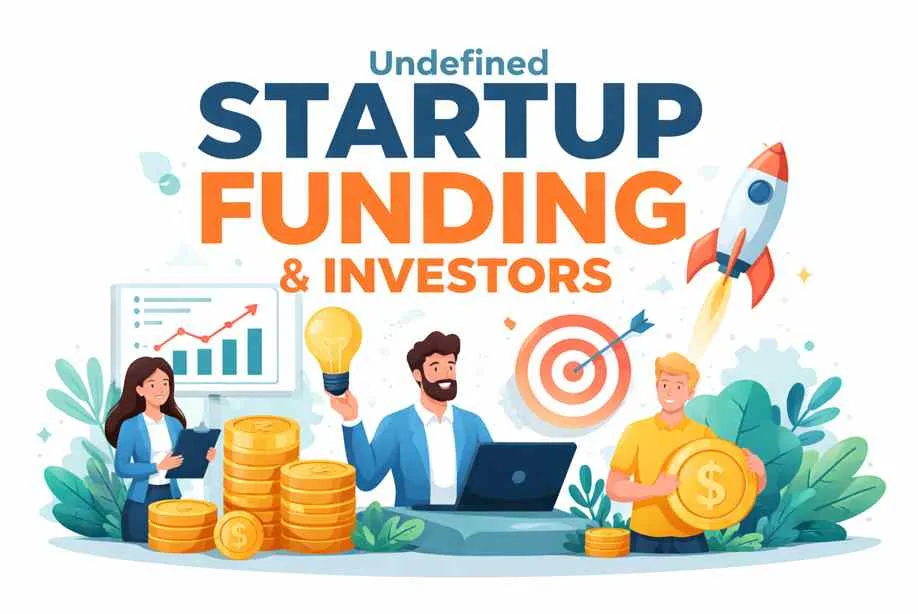


Undefined startup funding rounds investors usually refers to the full startup fundraising journey, from early idea stage funding to later growth rounds, and the investors who back each step. Startups often raise money in stages, and each stage brings different investor expectations, check sizes, risk levels, and growth goals.
What matters most is not raising the biggest round. What matters is choosing the right round at the right time, from the right investors, with a clear plan for how the money will help your company grow. Once you understand that, startup funding feels much less confusing.
Why startup funding rounds exist in the first place
Most startups do not raise one big amount of money and live happily ever after. They raise in stages because the business changes over time. In the early days, the company has more questions than proof, so investors take a bigger risk and usually invest smaller amounts.
Later, if the startup shows traction, revenue, customer growth, or a strong product market fit, new investors feel more confident. That confidence often leads to larger checks and higher valuations. So funding rounds are really a way to match money with business progress.
Think of it like climbing stairs instead of jumping to the roof. Each round helps the startup reach the next level. In return, investors get equity and hope the company becomes far more valuable over time.
What startup investors are really buying
Many founders think investors only buy a great idea. In reality, investors buy a mix of vision, execution, market size, team quality, and future potential. Even at the earliest stage, they want to believe this business can become much bigger than it is today.
Investors also buy speed and focus. They want to see that the team understands the problem, knows the customer, and can use capital wisely. A startup that burns cash without learning quickly will struggle, even if the original idea sounded exciting.
This is why fundraising is never only about the pitch deck. It is also about trust. Investors need confidence that you can take their money, make smart decisions, and turn early momentum into real company growth.
The main startup funding rounds explained simply
The names of funding rounds sound technical, but the logic is easy once you see the pattern. Earlier rounds fund proof. Middle rounds fund growth. Later rounds fund scale, expansion, and stronger market position.
Pre seed funding
Pre seed funding is often the first outside capital a startup raises. At this stage, the company may only have an idea, an early product, a small team, or some initial user feedback. Revenue is often low or even zero.
Pre seed money usually helps founders build the first version of the product, test demand, and prove that the problem is worth solving. Investors here may include founders themselves, friends and family, angel investors, and small early stage funds.
Because risk is high, investors care a lot about the founders. They want to see skill, obsession, and a clear understanding of the market. At pre seed, team quality often matters more than polished numbers.
Seed funding
Seed funding comes when the startup has moved beyond the raw idea stage. Maybe the product is live, maybe customers are signing up, or maybe the startup has early revenue and useful feedback. The business still feels young, but now there is something real to evaluate.
Seed money usually helps a startup improve the product, hire a few key people, grow customer acquisition, and find repeatable traction. Angel investors still matter here, but seed funds and early venture capital firms often become more active.
This round is where many founders learn an important lesson. Investors do not just ask, is this interesting. They ask, is this working enough to deserve more fuel. That shift changes the whole conversation.
Series A funding
Series A is usually the first round where institutional investors expect clearer proof that the startup can become a real business. By this stage, founders should show traction, sharper metrics, a clearer market, and a plan for growth that makes financial sense.
Series A money often goes into scaling the team, improving operations, growing marketing, building sales, and strengthening the product. Investors want to see more than excitement. They want evidence that the company can turn traction into a repeatable growth engine.
This is where founders often hear terms like unit economics, customer acquisition cost, retention, monthly growth, and runway more often. The business is still early, but the expectations become much more structured.
Series B funding
Series B is about expansion. The startup has already shown that customers want the product and that the business model has real potential. Now the goal is to grow faster, enter new markets, build stronger systems, and widen the lead over competitors.
Investors at this stage look closely at operational strength. They want to know whether the company can handle larger teams, more customers, and bigger spending without losing control. A startup that grew through hustle now needs stronger systems and leadership.
Series B investors still want upside, of course, but they also want discipline. The company can no longer act like a loose experiment. It has to start acting like a serious business with scale in sight.
Series C and later rounds
Series C and later rounds usually support large scale growth. This can include international expansion, acquisitions, new product lines, deeper market capture, or preparation for an exit such as an acquisition or public offering. Not every startup reaches this point, and that is normal.
Later stage investors often include growth funds, larger venture firms, strategic investors, and sometimes private equity style capital. These investors still care about vision, but they also care deeply about execution quality, market share, and long term defensibility.
At this stage, the startup is no longer trying to prove it exists. It is trying to prove it can dominate a category or become one of the most valuable players in its space.
| Funding Round | Typical Startup Stage | Common Investors | Main Goal |
|---|---|---|---|
| Pre seed | Idea, prototype, early testing | Founders, friends and family, angels | Build MVP and validate demand |
| Seed | Early product and first traction | Angels, seed funds, early VCs | Improve product and find repeatable growth |
| Series A | Traction with clearer business model | Venture capital firms | Scale product, team, and go to market |
| Series B | Proven growth and market fit | Larger VC firms, growth investors | Expand operations and market reach |
| Series C and beyond | Large scale growth | Growth funds, strategic investors | Dominate market, expand, or prepare exit |

The main types of startup investors
Not all investors think the same way. Some move fast and back people early. Others wait for more proof and invest larger amounts later. Understanding investor type helps founders avoid wasting time on people who are not a fit.
Friends and family
This is often the earliest money a founder can access. The benefit is trust and speed. The risk is obvious too, because mixing family relationships and startup risk can create pressure if things do not go well.
Founders should treat this capital seriously, with clear documents and honest communication. Even when the relationship is close, the deal should still be professional. That protects everyone involved.
Angel investors
Angel investors are individuals who invest their own money into startups. Some are former founders, operators, or executives who also share advice and connections. A good angel can become one of the most useful people in an early startup journey.
However, not every angel is equally helpful. Some write checks and disappear. Others bring introductions, hiring help, product feedback, and fundraising support. Founders should look for fit, not just cash.
Venture capital firms
Venture capital firms manage pooled money and invest in startups with strong growth potential. They often lead seed, Series A, and later rounds. Because they answer to their own investors, they usually expect larger outcomes and faster growth.
VCs can help with hiring, strategy, later rounds, and credibility. Still, they are not the right match for every business. A startup with a small market or slower growth path may feel pushed into goals that do not fit the company.
Strategic investors
Strategic investors are usually companies that invest because your startup supports their bigger business goals. They may offer money, partnerships, distribution, or industry access. In the right case, this can be very powerful.
Still, founders need to be careful. Strategic capital can bring conflicts, limits, or awkward future negotiations. If one large company invests too early, other partners or acquirers may become more hesitant later.
| Investor Type | Best Fit Stage | What They Often Care About | What They Can Add |
|---|---|---|---|
| Friends and family | Pre seed | Trust in founder | Fast early capital |
| Angel investors | Pre seed and seed | Founder quality and market vision | Advice and warm introductions |
| Seed funds | Seed | Early traction and growth potential | Fundraising support and startup network |
| Venture capital firms | Series A and beyond | Scale, metrics, and large outcome potential | Capital, credibility, and strategic help |
| Strategic investors | Later stage or sector specific | Business alignment and partnership value | Industry access and distribution |
What investors want to see before they invest
Investors do not expect the same thing at every stage, but some patterns show up again and again. They want to understand the problem, the customer, the size of the market, and why your startup can win. They also want to trust that your team can handle both growth and pressure.
A clear problem
If the problem feels weak, the pitch usually feels weak too. Great startups often solve painful, expensive, urgent, or emotional problems. When the pain is real, customers pay attention faster and investors understand the opportunity more clearly.
A believable market
Investors want to know that the startup is not building for a tiny corner of the world. The market does not need to be enormous on day one, but there should be room to grow. A startup with a narrow ceiling will struggle to attract big venture capital.
Traction that matches the stage
At pre seed, traction might mean interviews, waitlists, prototype feedback, or a small pilot. At seed, it might mean active users, revenue, retention, or healthy growth. At Series A, traction usually needs to look more repeatable and measurable.
A strong founding team
Founders matter a lot because early stage startups change constantly. Investors know the first plan will not stay perfect. They look for founders who learn fast, communicate clearly, and stay steady when things get messy.
Evidence of focus
Many startups try to impress investors by doing too much. That often backfires. Investors usually prefer a startup that knows exactly who it serves, what it solves, and why that wedge can grow into something much bigger.
| Stage | What Investors Usually Want to See | Red Flag |
|---|---|---|
| Pre seed | Strong founder story, market insight, early product direction | Vague problem and weak customer understanding |
| Seed | Early traction, user love, proof of demand | Lots of talk but no real usage |
| Series A | Repeatable growth, stronger metrics, clear model | Growth with poor retention |
| Series B | Operational strength, scaling plan, team depth | Growth without systems or margins |
Valuation, dilution, and runway, the three things founders must understand
These three ideas shape almost every funding conversation. If you do not understand them, you can still raise money, but you may make painful mistakes. Good founders learn these terms early, not after signing documents.
Valuation
Valuation is the price investors place on the startup before or after investment. A higher valuation sounds great, but it is not always a win. If the valuation gets too high too early, the company may struggle to justify it in the next round.
A healthy valuation should reflect progress, not ego. Founders sometimes chase a flashy number, but a sensible round with supportive investors is often much better than a shiny round that creates pressure later.
Dilution
Dilution means your ownership percentage becomes smaller when new shares are issued. This is normal in fundraising. The goal is not to avoid all dilution, but to make sure the money you raise creates more value than the ownership you give up.
Founders should think carefully here. Giving away too much equity early can hurt long term control and future flexibility. Therefore, the best round is usually the one that gives enough capital without weakening the cap table too much.
Runway
Runway is how long your startup can operate before it runs out of cash. Investors care about runway because it shows whether you can survive long enough to hit the next milestone. A startup with weak runway often feels desperate, and investors notice that quickly.
Fundraising gets easier when founders know their burn, hiring plan, and milestone budget instead of guessing under pressure.
How founders should prepare before fundraising
Raising money starts long before the first investor call. Good fundraising usually looks smooth from the outside because the founder did the hard prep work first. That prep gives the story more clarity and the numbers more trust.
Build a simple, sharp story
Your story should answer a few core questions fast. What problem do you solve, for whom, why now, why you, and why this can become big. If you need ten minutes to explain the basics, the story probably still needs work.
Your pitch should feel clear, not clever. Investors hear many pitches, so the startup that explains the problem cleanly often stands out more than the one using fancy language. Clear beats complicated almost every time.
Know your numbers
Even early founders should understand core numbers. That includes revenue, growth, churn, burn, runway, and customer behavior if those metrics exist. You do not need perfect data, but you do need honest data.
Investors trust founders more when they can explain how money flows through the business and what milestones the next round should unlock.
Get your operations cleaner than you think you need
Messy operations create doubt. If your contracts are unclear, cap table is confusing, or basic records are scattered, investors may worry that larger problems sit beneath the surface. Clean preparation makes the company feel safer.
As the team grows, simple systems like budgeting, reporting, and spending discipline start to matter more. That is one reason learning about cash management services can help founders build stronger habits before the company becomes financially messy.
Prepare the company, not only the deck
Many founders polish slides and ignore company structure. That is risky. Investors may ask who makes decisions, how ownership works, and whether the company can handle growth without internal confusion.
Improve your market presence
Fundraising often gets easier when the startup already looks credible online. A clean website, clear message, and strong brand signal that the company takes itself seriously. Investors notice details like this, even when they do not mention them right away.
That is why early founders often benefit from stronger positioning and professional digital solutions. Better visibility does not replace traction, but it can support trust and help the company look more investor ready.
Common mistakes founders make with startup funding rounds
Most fundraising mistakes do not happen because founders are lazy. They happen because fundraising mixes emotion, ambition, and uncertainty. When that pressure rises, even smart people can make avoidable choices.
Raising too early
Some founders start pitching investors before the product, story, or traction is ready. This creates weak first impressions and burns warm contacts too soon. It is often better to wait a little, sharpen the story, and show stronger proof.
Talking to the wrong investors
A founder might pitch a Series A firm when the startup still looks pre seed. Or they may approach strategic investors before the company is ready for that kind of relationship. This wastes time and lowers morale.
Investor fit matters almost as much as startup quality. A good round comes from matching your stage, market, and ambition with investors who actually like deals like yours. Otherwise, even a strong startup can get many wrong noes.
Focusing only on valuation
The highest valuation is not always the best deal. If the investor is difficult, unhelpful, or unrealistic, that extra number can cost a lot later. Founders should care about terms, support, reputation, and alignment too.
Ignoring internal founder growth
As the startup grows, the founder has to grow too. Leading a small product team is very different from leading a funded company with investor updates, hiring, targets, and pressure. This is why founder learning and a strong skill development guide mindset matter so much.
Forgetting that not every business needs venture capital
This is a big one. Some businesses are good businesses but not venture scale businesses. That is not failure. It simply means the company may grow better through revenue, smaller checks, or different financing paths.
How to know if you are ready for your next round
You are probably closer to ready when three things are true. First, you can explain exactly what the money will do. Second, you can show evidence that the business has moved past pure hope. Third, you know which milestone the round should help you reach next.
Readiness also shows up in confidence, but not fake confidence. A ready founder can answer hard questions without panic. They know the weak spots, the risks, and the plan to improve them.
If the round would only buy time but not progress, you may not be ready yet. Investors want their money to create momentum. A startup that cannot turn capital into measurable progress will always struggle to raise well.
Helpful outside resources founders should know
If you want to understand early fundraising better, the Y Combinator library is a useful place to learn how founders think about seed fundraising, product market fit, and startup growth. It is practical, direct, and easy to follow.
Founders should also remember that fundraising involves legal rules, not just pitch skills. The U.S. Securities and Exchange Commission small business resources can help you understand the legal side of raising capital and speaking with investors more carefully.
Final thoughts on startup funding rounds and investors
Startup funding rounds and investors only feel mysterious at first. Once you understand the pattern, the journey becomes much easier to read. Early rounds fund learning, middle rounds fund growth, and later rounds fund scale, while investor expectations rise at every stage.
The best founders do not chase money blindly. They raise with purpose, choose investors with care, and stay focused on the next real milestone instead of just the next headline. That mindset protects the company and makes every round more useful.
If you are building now, take a step back and ask a simple question. What does your startup truly need next, proof, traction, systems, or scale. Once you answer that honestly, you will know which round to target and which investors are worth your time.