



If you are looking to optimize your investments, you may have heard the term mutual fund indexation. It is a strategy that helps investors reduce taxes and maximize long term returns.
Mutual fund indexation is the process of calculating capital gains on long term investments by adjusting the purchase price for inflation. This reduces taxable gains, allowing investors to keep more of their profits.
Understanding indexation is important for anyone investing in mutual funds, especially in equity and debt schemes. This guide will explain how indexation works, its benefits, tax implications, and practical tips for investors.

What Is Mutual Fund Indexation
Mutual fund indexation refers to the method of adjusting the purchase price of mutual fund units for inflation when calculating capital gains. The adjusted cost of acquisition lowers the taxable gain for long term investors.
For example, if you bought a debt mutual fund five years ago, the inflation rate is applied to your purchase price. When you sell the fund, only the inflation-adjusted gain is taxed.
This method benefits investors by accounting for the erosion of money value over time due to inflation. It is commonly used for debt funds and some hybrid funds where long term gains are taxable.
Equity mutual funds also benefit under certain tax rules, though indexation primarily applies to non-equity funds.
How Mutual Fund Indexation Works
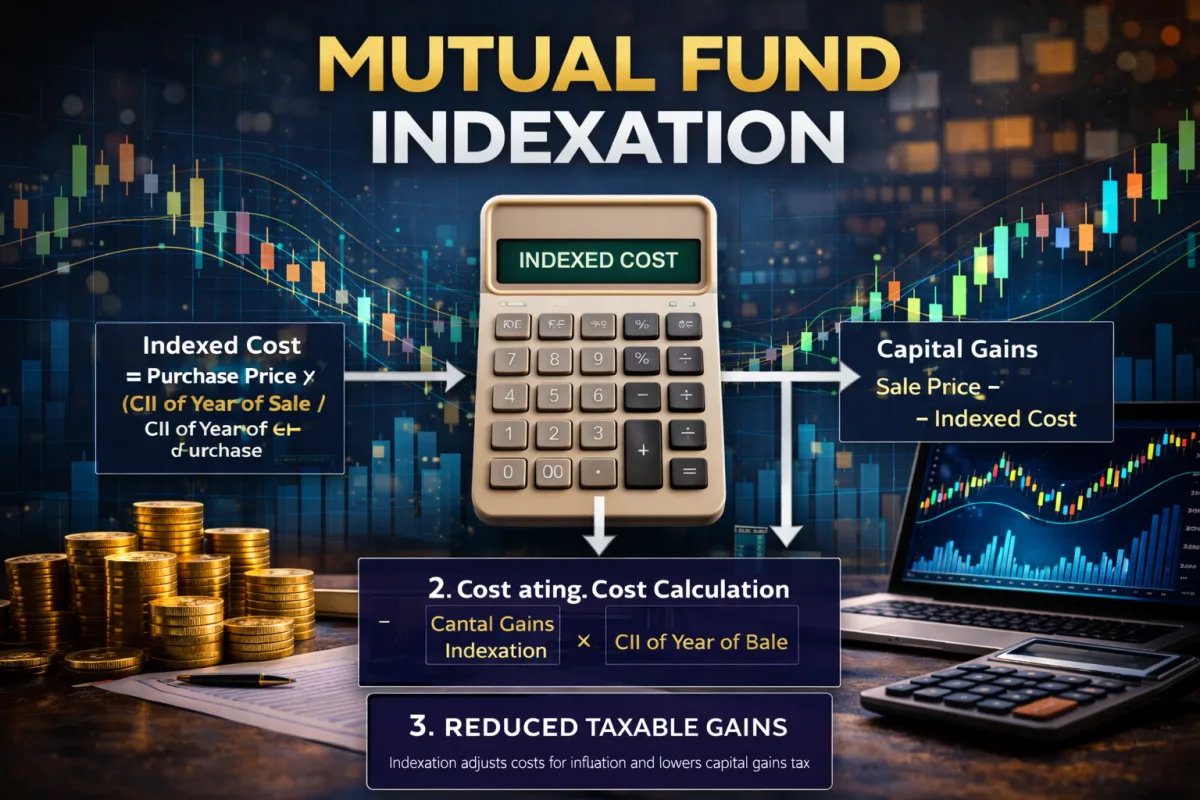
Indexation uses a Cost Inflation Index (CII) provided by the government each year. The formula for calculating indexed cost is:
Indexed Cost of Acquisition = Purchase Price × (CII of Year of Sale / CII of Year of Purchase)Once the indexed cost is calculated, capital gains are computed as:
Capital Gains = Sale Price - Indexed Cost of AcquisitionThis ensures that inflation is accounted for and reduces the taxable amount significantly, especially over long holding periods.
Benefits of Mutual Fund Indexation
Indexation provides several advantages for long term investors. Here are the main benefits:
- Reduced Tax Liability: By adjusting for inflation, the taxable capital gains decrease, leading to lower taxes.
- Encourages Long Term Investment: Indexation makes holding investments for longer periods more profitable.
- Inflation Protection: It helps investors preserve the real value of returns after tax.
- Better Portfolio Planning: Tax savings allow reinvestment and compounding over time.
Types of Mutual Funds Eligible for Indexation
Not all mutual funds benefit from indexation. Understanding eligible categories is crucial for planning your investment strategy.
Debt Mutual Funds
Long term debt mutual funds (held over 3 years) are eligible for indexation. This includes government bonds, corporate bond funds, and fixed income schemes.
Hybrid Funds
Debt oriented hybrid funds also qualify for indexation if the debt portion exceeds the required threshold. Equity-oriented funds typically do not use indexation for capital gains.
Non-Equity Funds
Other non-equity schemes like gilt funds or income funds benefit the most from indexation due to long term holding periods.
Tax Implications of Mutual Fund Indexation
Indexation significantly reduces tax liability on long term capital gains. For debt funds in India, long term capital gains are taxed at 20% with indexation benefits.
Without indexation, gains from the same investment would be taxed higher, usually at the investor's income tax slab. This makes indexation a powerful tool for tax efficient investing.
Equity mutual funds have different rules. Long term capital gains over a certain threshold (for example 1 lakh INR in India) are taxed at 10% without indexation.
Investors must consult their tax advisor or use government notifications for accurate CII values and rules.
Practical Tips for Investors Using Indexation
Understanding indexation is not enough; applying it strategically matters. Here are some practical tips:
- Hold Investments Long Term: Longer holding periods increase benefits from indexation due to compounding inflation adjustments.
- Choose Debt or Hybrid Funds Carefully: Pick funds that qualify for indexation and align with your risk profile.
- Reinvest Tax Savings: Use savings from lower taxes to compound returns further.
- Track CII Values: Keep updated with yearly Cost Inflation Index values to calculate accurate gains.
Common Mistakes Investors Make
Many investors overlook indexation or misuse it. Common mistakes include:
- Failing to hold funds long enough to qualify for long term gains.
- Using indexation incorrectly for equity funds where it is not allowed.
- Ignoring tax benefits in portfolio planning.
- Not maintaining proper records of purchase date, price, and units.
Comparison: With and Without Indexation
| Scenario | Capital Gains Tax | Benefit |
|---|---|---|
| Without Indexation | Taxed at 30% of total gains for debt funds | Higher tax liability, lower net returns |
| With Indexation | Taxed at 20% after inflation adjustment | Lower tax, higher net returns, encourages long term holding |
Conclusion
Mutual fund indexation is a smart tool for long term investors aiming to save on taxes and maximize wealth. By adjusting purchase price for inflation, it reduces taxable capital gains and encourages long term investing.Investors should understand which funds qualify, track CII values, and apply indexation strategically. With careful planning, you can enhance portfolio returns and protect your investments against inflation.Start reviewing your debt and hybrid mutual funds for indexation benefits today. This simple strategy can help you save taxes and grow your wealth more efficiently over time.