





If you are searching for lead time definition, you are trying to understand how long it takes to complete a process from start to finish. Lead time means the total time between placing an order and receiving the final result.
In simple words, lead time is the waiting time you experience after requesting something until it is delivered. Businesses use this idea to improve speed, reduce delays, and keep customers happy.
Introduction
Let me ask you something. Have you ever ordered something online and kept checking your phone again and again. You just want to know when it will arrive. That waiting time is exactly what we call lead time.
This small concept actually controls a big part of business success. If the waiting time feels too long, customers lose interest. However, when things arrive quickly, people feel satisfied and trust the service more.
What Is Lead Time in Real Life
Lead time is not just a business term. You experience it almost every day. Whenever you order food, book a service, or shop online, lead time is involved.
For example, if you order a pizza and it takes 30 minutes to arrive, that 30 minutes is the lead time. It includes cooking time and delivery time together.
Simple Breakdown of Lead Time
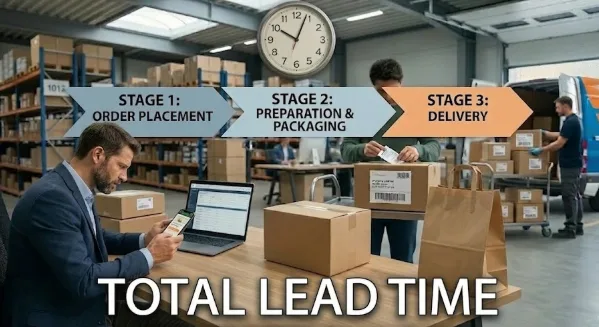
This image shows a simple process. First you place an order, then the product is prepared, and finally it is delivered. All these steps together form the total lead time.
So instead of thinking it is just one step, remember it is a combination of multiple stages working together.
Types of Lead Time You Should Know
Customer Lead Time
This is the time a customer waits from placing an order to receiving it. This is the most important type because it directly affects satisfaction.
Production Lead Time
This refers to how long it takes to create a product. It includes preparation, manufacturing, and finishing.
Supply Lead Time
This is the time needed to receive raw materials from suppliers. If this takes longer, everything else slows down.
Delivery Lead Time
This is the shipping time. Faster delivery means shorter total lead time.
Lead Time Formula Explained Simply
You do not need to be an expert to understand this. The formula is very easy.
Lead Time equals Supply Time plus Production Time plus Delivery Time
For example, if supply takes 2 days, production takes 3 days, and delivery takes 2 days, then total lead time is 7 days.
Why Lead Time Matters So Much
Customer Experience
People do not like waiting. If your lead time is short, customers feel happy and return again. However, long delays can push them away.
Business Efficiency
When processes run smoothly, work gets done faster. This improves productivity and saves time.
Better Planning
Knowing lead time helps businesses plan inventory and avoid shortages. It also reduces stress during busy times.
Lead Time vs Cycle Time
| Point | Lead Time | Cycle Time |
|---|---|---|
| Meaning | Total process time | Time to complete one task |
| Includes waiting | Yes | No |
| Focus | Customer view | Internal work |
This comparison helps you understand that lead time gives a bigger picture while cycle time focuses on a smaller part.
Common Problems That Increase Lead Time
Slow Suppliers
If suppliers delay materials, production cannot start on time. This increases total waiting time.
Poor Communication
Miscommunication between teams causes confusion and delays. Clear communication is very important.
Manual Work
Too much manual work slows down processes. Automation can help reduce this problem.
How to Reduce Lead Time Effectively
Improve Process Flow
Check every step and remove unnecessary delays. Even small improvements can make a big difference.
Use Technology
Tools and software can speed up tasks and reduce human error. This saves time and effort.
Choose Reliable Partners
Working with trusted suppliers and delivery services ensures faster and smoother operations.
Keep Smart Inventory
Having the right amount of stock helps avoid waiting for materials.
Real Life Business Example
Think about an online clothing store. When you place an order, the company needs to pick the item, pack it, and ship it.
If everything works smoothly, you receive your product quickly. However, if one step slows down, the whole process gets delayed.
Mistakes You Should Avoid
Ignoring Data
Many businesses do not track lead time properly. This leads to poor decisions and delays.
Overcomplicating Process
Too many steps make things slower. Keep processes simple and efficient.
No Backup Plan
Unexpected issues can happen anytime. Having a backup plan helps avoid delays.
Conclusion
Understanding lead time definition is more powerful than it looks. It helps you see how time flows in any process and where delays happen.
If you want better results in business or daily life, start paying attention to lead time. Improve it step by step and you will see faster results, happier customers, and smoother operations.