





Are you already married but wondering if it’s too late to get a prenup? The answer is no! While prenups are traditionally signed before marriage, you can still get a prenup after marriage through a postnuptial agreement (or postnup). In this article, we'll explore everything you need to know about postnups, their benefits, and how they can offer protection even after you're married. Couples can still protect their assets after marriage with a postnuptial agreement.
What is a Prenup and Postnup?
Before diving into the specifics of getting a prenup after marriage, let's define what a prenuptial agreement and postnuptial agreement are. A prenup is a contract signed by two individuals before marriage, outlining how their assets and liabilities would be divided in case of divorce. It can cover things like property, finances, and debt division.
A postnup, on the other hand, is signed after marriage, with the same purpose but at a later stage in the relationship. It allows couples to address financial matters that have changed over time or simply to revisit their financial arrangements. Both agreements are legally binding when done properly, but the key difference lies in their timing.
Can You Get a Prenup After Marriage?
The short answer is yes. You can get a prenup after marriage, but it would be referred to as a postnuptial agreement. A postnup serves the same function as a prenup, helping to protect assets, clarify debt responsibilities, and outline how property should be divided in case of divorce. The process for creating a postnuptial agreement is very similar to that of a prenup, and it offers flexibility for married couples who didn’t sign a prenup before tying the knot.
Why Do You Need a Postnuptial Agreement?
Now you may be asking, why would someone want a postnuptial agreement after getting married? There are many reasons, and it’s becoming more common for couples to opt for a postnup as their financial situation evolves.
1. Changes in Financial Situation
Life events such as job promotions, business ownership, or a large inheritance can change your financial situation. A postnup can help redefine the financial responsibilities and asset ownership that reflect your current situation, protecting both partners' interests.
2. Adding or Adjusting Debt
If one spouse has accumulated significant debt after marriage, a postnup can ensure that the other spouse is not held responsible for that debt. This is particularly useful in cases where one spouse inherits large debts or takes on liabilities without the other's knowledge.
3. Blended Families and Inheritance Concerns
If either partner has children from a previous relationship, a postnup can help ensure that assets are passed down according to their wishes. This is crucial in cases where a spouse wants to protect inheritance rights for their children or keep family wealth within their biological family.
4. Business Protection
If one spouse owns a business, a postnuptial agreement can help protect that business in the case of divorce. It ensures that the business remains separate property, preventing it from being divided as marital property.
5. Strengthening Communication and Trust
Creating a postnup isn’t just about protection; it also strengthens communication within the marriage. Discussing finances openly can foster a sense of trust and ensure both partners are on the same page about their financial future.
How to Create a Postnuptial Agreement
Creating a postnup involves several important steps, which must be done carefully to ensure it is legally enforceable.
1. Consult Separate Attorneys
It’s crucial for both spouses to have separate legal representation. This helps ensure that both partners understand the agreement and are fairly represented. An attorney can provide advice and make sure that the agreement is drafted in a way that meets legal standards.
2. Full Disclosure of Assets and Debts
Both spouses must fully disclose all their assets and liabilities. This includes bank accounts, real estate, debts, and any other financial holdings. Failing to do so can make the postnup unenforceable later on.
3. Agree on Terms
Both spouses must agree on the terms of the postnuptial agreement. This may include how property will be divided, what happens to shared assets or debts, and how income will be managed if the marriage ends. Be sure to make these decisions with fairness in mind.
4. Sign and Notarize the Agreement
Once the agreement is drafted, both spouses must sign it in the presence of a notary public. Notarization ensures that the agreement is legally binding and that both parties have signed voluntarily.
5. Keep the Agreement Updated
As life circumstances change, it's important to revisit your postnuptial agreement. Major life events like buying a house or the birth of a child may require modifications to the agreement to ensure it remains relevant.
Postnup vs. Prenup: Key Differences
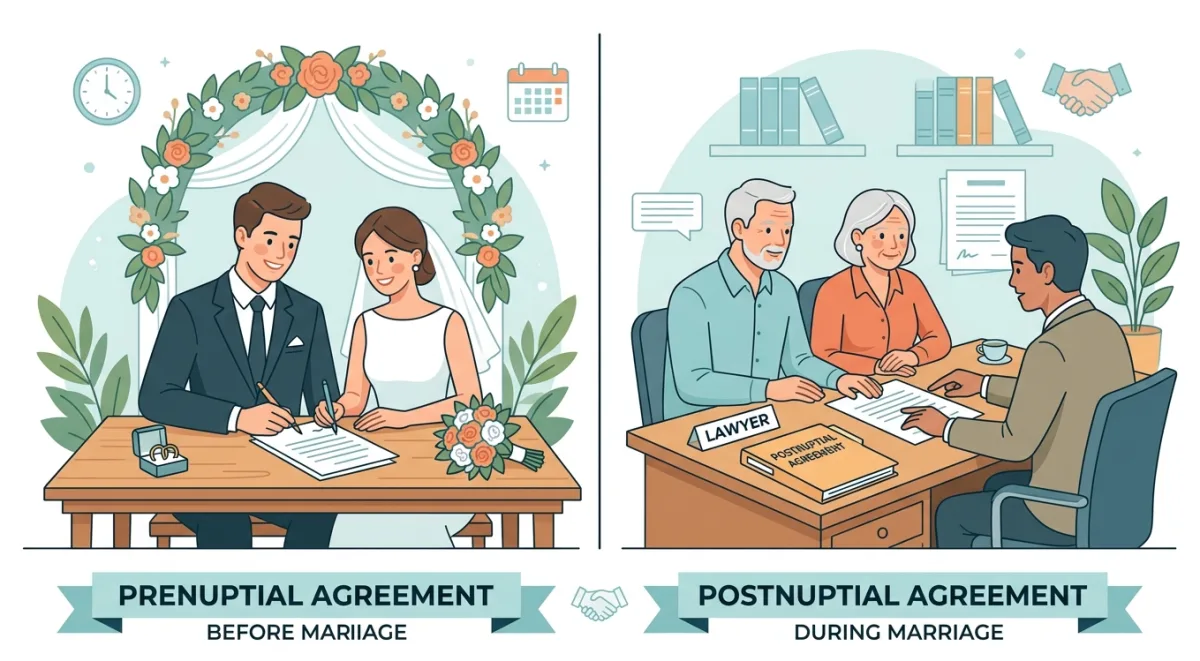
While both prenuptial and postnuptial agreements help couples outline financial matters, the timing is the biggest difference. A prenup is signed before marriage, while a postnup is signed after the wedding. Here’s a comparison of the two:
| Factor | Prenup | Postnup |
|---|---|---|
| When it is signed | Before marriage | After marriage |
| Purpose | Protect assets before marriage | Protect assets and clarify finances after marriage |
| Flexibility | Typically more flexible | Can be more rigid, depending on state laws |
| Enforceability | Generally enforceable if done correctly | Can be enforceable if done correctly |
Benefits of Postnuptial Agreements
Postnups offer several benefits that can help ensure financial fairness and security for both partners in a marriage:
- Clear Financial Boundaries: Prevent misunderstandings and disputes regarding finances by clearly defining each partner’s assets and responsibilities.
- Peace of Mind: Knowing that financial matters are handled can alleviate stress and allow both spouses to focus on their relationship.
- Protection in Case of Divorce: Having an agreement in place can make the divorce process smoother and less contentious by having a clear plan in advance.
- Prevent Legal Battles: By addressing potential issues upfront, postnups can reduce the likelihood of lengthy and expensive court battles.
Common Mistakes to Avoid with a Postnuptial Agreement
1. Not Seeking Legal Advice
Always consult with an attorney to ensure that the postnuptial agreement is legally sound and fair for both parties.
2. Hiding Assets
Both spouses must be transparent about their financial situation. Hiding assets can make the agreement invalid and cause future problems.
3. Rushing the Process
Take your time to understand the terms of the agreement and ensure that both partners are on the same page. Rushing can lead to mistakes and misunderstanding.
4. Not Revisiting the Agreement
Life changes, and so should your postnuptial agreement. Don’t forget to revisit it periodically to ensure it still reflects your current circumstances.
Conclusion
Getting a prenup after marriage is absolutely possible with a postnuptial agreement. A postnup can help clarify financial arrangements, protect assets, and offer peace of mind. If you feel that a postnuptial agreement is right for you and your spouse, take the necessary steps to create one with the help of a lawyer. It’s a smart way to protect your future and ensure that both partners are on the same page financially.