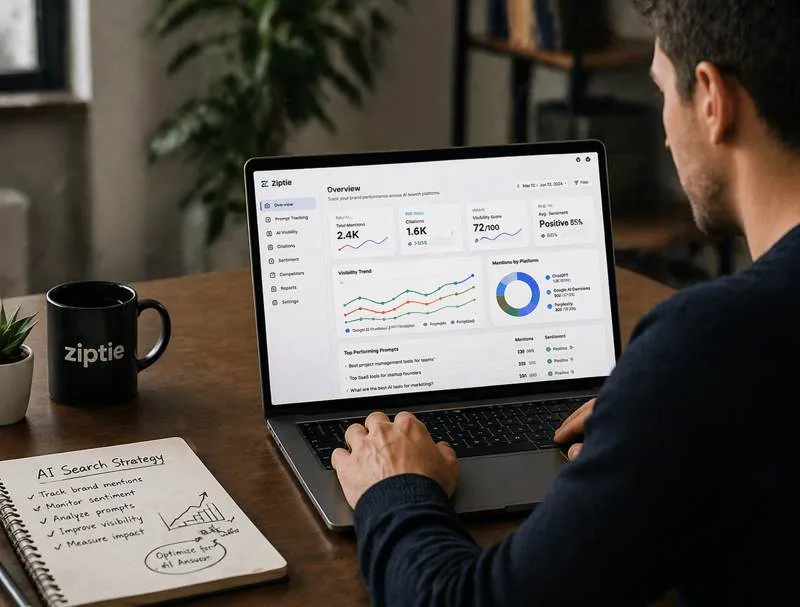

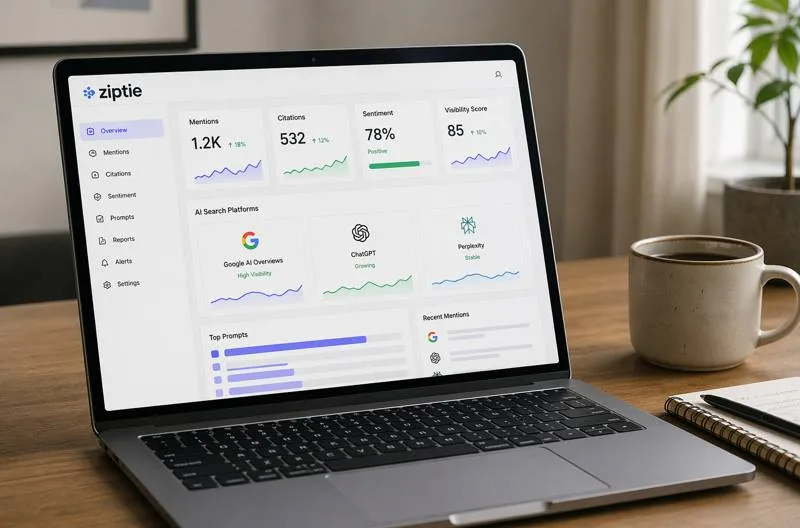
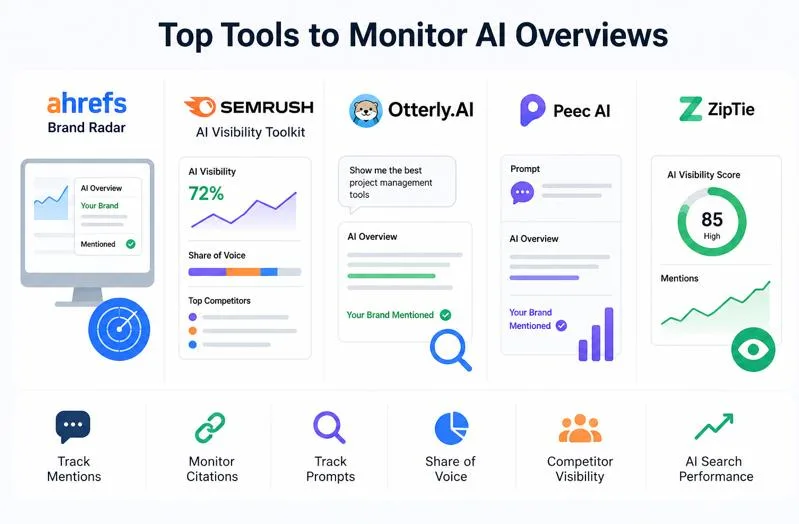
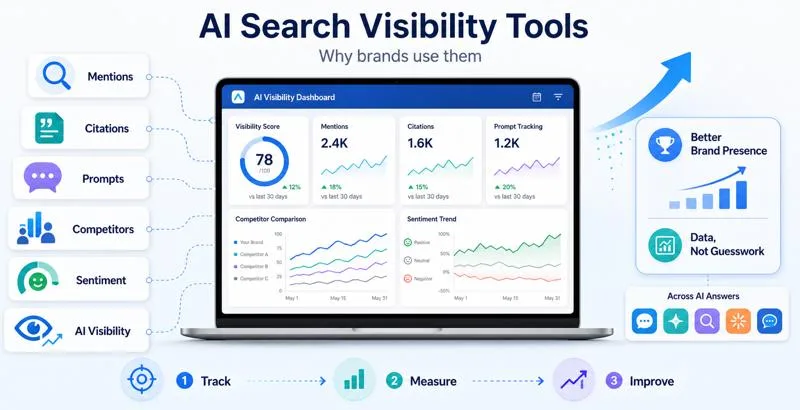
Ziptie AI search performance tool is used to track how a brand appears inside AI powered search results, especially in Google AI Overviews, ChatGPT, and Perplexity. It helps you monitor mentions, citations, sentiment, and prompt level visibility, then gives you insights that can help improve your AI search presence.
That short answer helps, but most people need more than that. You also want to know how the tool works, who it is best for, what features matter most, and where it fits beside regular SEO. This article walks through all of that in a clear and practical way.
What Is Ziptie AI Search Performance Tool
Ziptie is an AI search visibility and monitoring tool. According to ZipTie.dev, it helps brands track how they show up across Google AI Overviews, ChatGPT, and Perplexity, and it provides practical insights to improve online presence. It is built around AI search performance, not just traditional keyword rankings. ZipTie.dev official site.
That difference matters a lot. A normal SEO platform may tell you where a page ranks in classic search results. Ziptie is focused on whether your brand gets mentioned in AI generated answers, whether your site gets cited, how positive those mentions are, and which prompts matter most.
So the tool is not mainly for writing content, building backlinks, or doing technical site audits by itself. Its main job is showing how your brand performs inside AI search experiences and helping you decide what to improve next.
Why AI Search Performance Matters Now
More people are getting answers from AI systems instead of clicking through ten blue links first. When that happens, your brand can win attention even without a traditional top ranking, but it can also disappear if AI engines do not mention or cite you. That is the problem this type of tool tries to solve.
ZipTie.dev says it tracks major AI success indicators such as mentions, citations, and sentiment. That means the tool is built around the real signals that shape whether a brand is visible inside AI answers, not only around standard SERP positions. ZipTie AI search optimization guide.
This makes AI search monitoring useful for marketers, founders, agencies, and content teams that want to understand how their brand is being represented when users ask AI tools for recommendations, explanations, or product comparisons.
If you like simple explanations of newer AI topics, what are AI agents, a simple guide for non tech people is a natural related read. It fits well because both topics are about understanding fast moving AI tools in plain language.
How Ziptie Works in Simple Terms
The basic idea is straightforward. You set up a project, add brand details or relevant queries, and then the platform checks how often and how well your brand appears inside AI search answers. ZipTie.dev describes the process as setting up a project, monitoring performance, and optimizing with insights.
Instead of only showing ranking data, the tool looks at answer level visibility. It checks whether AI systems mention your brand, whether those mentions are positive or negative, and whether your website is used as a source. That gives a more realistic picture of how AI search treats your brand.
For teams trying to move beyond guesswork, that is useful. You stop asking “Are we visible in AI search” in a vague way, and you start seeing prompt by prompt patterns that can guide actual decisions.
What It Tracks
ZipTie.dev says it tracks brand mentions, sentiment analysis, citation tracking, competitive benchmarking, AI Overview coverage, and full response text across Google AI Overviews, ChatGPT, and Perplexity. These are the core data points that help brands understand whether AI systems talk about them and how they are being represented. ZipTie features overview.
That mix is important because AI search is not only about being visible. It is also about context. A mention can be helpful, neutral, or harmful. A citation can show authority. Full answer text can reveal how the model frames your product, company, or service.
In short, the tool is not only measuring presence. It is also helping you understand quality, influence, and competitive position inside AI answers.
What Makes It Different From Regular SEO Tools
Regular SEO tools usually focus on rankings, links, crawl issues, and organic search traffic. Ziptie is focused on AI answer visibility. ZipTie.dev also says it offers content optimization recommendations, an AI assistant for relevant query discovery, and success scores that help prioritize which prompts to improve first.
This does not mean SEO stops mattering. It means AI search adds another layer. Strong SEO still helps your site become citable and authoritative, but an AI search tool helps you see whether that authority is actually turning into mentions and citations inside AI responses.
That is why many brands should think of Ziptie as a complement to SEO, not a replacement for it. The best results usually come when both sides work together.
Main Features That Matter Most
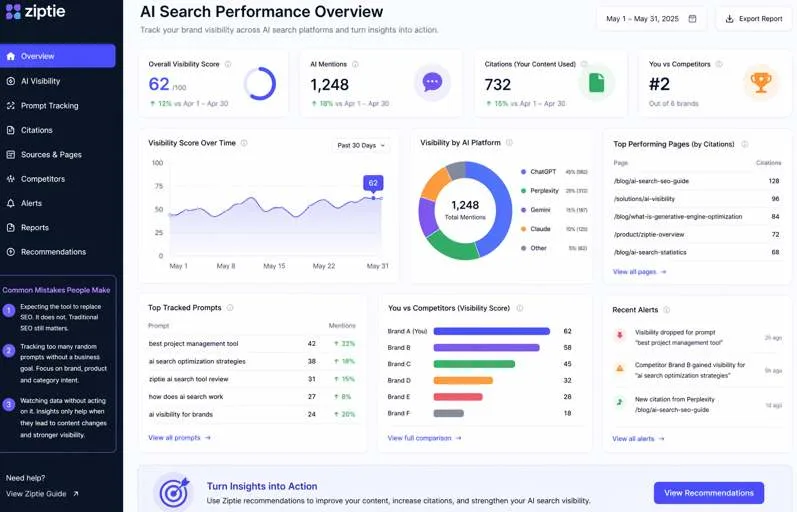
When people ask if a tool is worth using, they usually want to know whether the features solve real problems. Ziptie has a few features that stand out because they answer common questions marketers now have about AI search.
| Feature | What It Does | Why It Matters |
|---|---|---|
| AI search monitoring | Tracks visibility across Google AI Overviews, ChatGPT, and Perplexity | Shows where your brand appears in AI answers |
| Mentions and citations | Measures whether your brand is named and your site is referenced | Helps show authority and discoverability |
| Sentiment analysis | Checks whether brand mentions are positive or negative | Shows how AI systems frame your brand |
| Query generation | Suggests relevant prompts to test | Finds opportunities you may not think of manually |
| Success scoring and insights | Helps prioritize which prompts need work first | Saves time and sharpens optimization |
These features matter because AI search can be messy if you try to track it by hand. Prompt discovery, answer capture, citation review, and sentiment reading take time. A tool becomes valuable when it pulls those steps into one place and makes the picture easier to understand.
If you are interested in broader tool selection and business use cases, best 5 AI business tools in 2026 for productivity and growth is another natural internal link. It fits because people exploring Ziptie are often also comparing other AI driven work tools.
Who Should Use Ziptie
Ziptie makes the most sense for brands that care about visibility in AI answers, not only in classic search results. That includes SaaS companies, agencies, ecommerce brands, publishers, and service businesses that want to see how AI systems describe them when users ask important questions.
It is also useful for marketing teams that need clearer reporting. Instead of guessing whether ChatGPT or Google AI Overviews are picking up the brand, they can track specific queries and see trends over time. That is especially helpful in competitive markets where even small visibility changes can matter.
However, it may be less useful for someone who only wants a general purpose SEO suite or a cheap content writer. This tool is more focused. Its value shows up when AI answer visibility is already part of your real business goal.
How to Get Better Results With It
The tool works best when you use it as part of a broader content and search strategy. Start by tracking important brand and category prompts. Then look at where you are missing, where competitors are being cited, and where your sentiment is weak or unclear.
ZipTie’s own materials say the logic is simple, if you get featured on sources that AI systems already trust and reference, you are more likely to be mentioned in AI search results. That means optimization is not only about watching data. It is about improving the pages, entities, and sources AI systems already rely on. How ZipTie suggests optimizing for AI search.
This is why operational follow through matters. You need strong content, clearer entity signals, trusted citations, and pages that deserve to be referenced. The monitoring tool helps you see the gap, but the real improvement still comes from execution.
How It Fits Into a Bigger Workflow
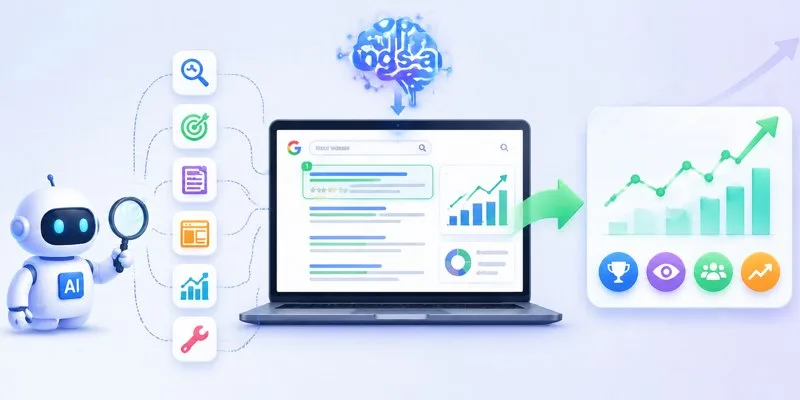
A smart workflow usually looks like this. First, monitor prompt level visibility. Next, identify which topics, pages, or brand questions are weak. Then update content, strengthen trusted references, and improve clarity around products, services, and expertise. After that, measure again and watch for change.
This kind of loop works especially well for teams that already care about structured improvement. If that sounds like your style, professional digital solutions is a relevant internal read because it connects with the broader idea of using software and better systems to improve work quality over time.
The key point is simple. Ziptie is most useful when it becomes part of a repeatable decision process, not just another dashboard you open once and ignore.
Common Mistakes People Make
The first mistake is expecting the tool to replace SEO. It does not. Traditional SEO still matters because AI systems need crawlable, understandable, trustworthy content to cite and summarize. Ziptie adds a visibility layer, but it does not remove the need for strong site fundamentals.
The second mistake is tracking too many random prompts without a business goal. If you monitor vague questions that do not connect to your audience, the data may look interesting but still not help your business. Better tracking starts with clear brand, product, and category intent.
The third mistake is watching data without acting on it. Visibility reports are useful only when they lead to content changes, stronger positioning, and better source presence. Otherwise, you are just collecting evidence of a problem instead of solving it.
Is Ziptie Worth Using
If your brand cares about how it shows up in AI answers, then yes, Ziptie can be worth serious attention. Its official materials show that it was built specifically for AI search visibility across major platforms and includes actionable features like query discovery, citation tracking, sentiment analysis, and optimization guidance.
If you do not yet care about AI search performance, then it may feel too specialized. But that gap is shrinking quickly because AI answers are becoming a normal part of how people research products, services, and brands. For many teams, this is becoming less optional and more strategic.
The best way to judge it is practical. Ask whether your audience uses AI search, whether your brand needs visibility there, and whether your team needs clearer data than manual checking can provide. If the answer is yes, then the tool is solving a real problem.
Conclusion
Ziptie AI search performance tool is built to help brands understand and improve visibility inside AI generated answers, especially across Google AI Overviews, ChatGPT, and Perplexity. Its value comes from showing mentions, citations, sentiment, and prompt level performance in one clearer system.
If you want to be taken seriously in AI search, do not rely on guesswork alone. Track the right prompts, look at where your brand is weak, improve the content and sources AI systems trust, and measure again. That step by step approach is where a tool like Ziptie becomes genuinely useful.