
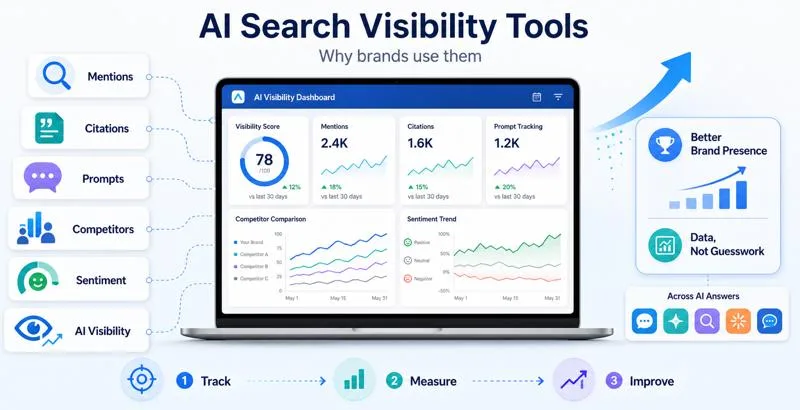
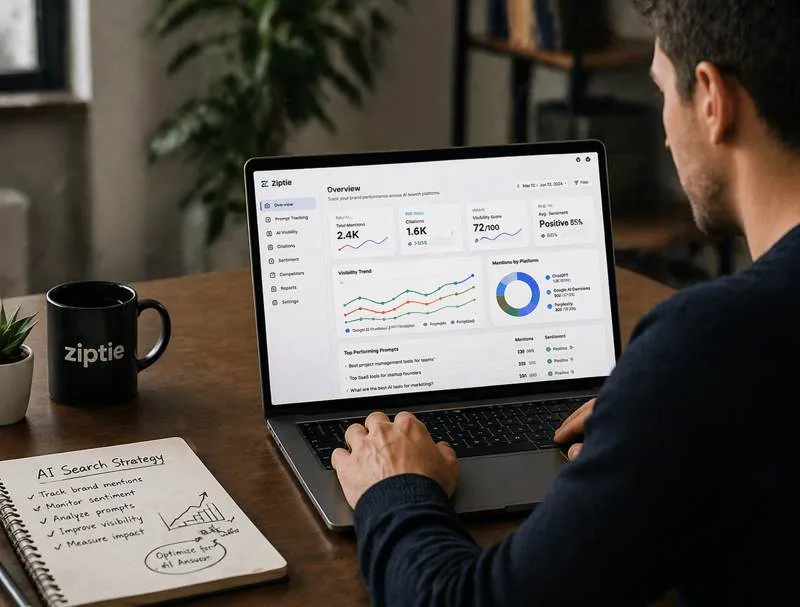
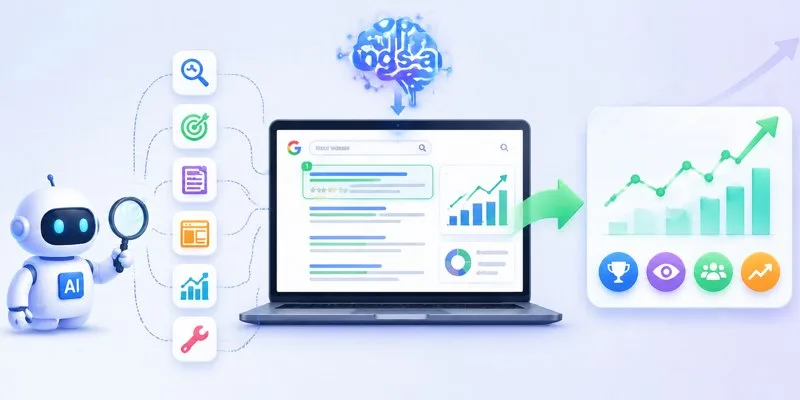
AI search visibility management tools help brands track, measure, and improve how they appear in AI generated answers across platforms like Google AI Overviews, ChatGPT, Perplexity, Gemini, and similar systems. They usually monitor mentions, citations, prompts, competitors, and sometimes sentiment so teams can manage AI search presence with data instead of guesswork.
That short answer helps, but it does not tell you why the category matters so much now. It also does not show which features matter most, how these tools differ from regular SEO tools, or when a team actually needs one. This guide explains all of that in simple English.
What AI Search Visibility Management Really Means?
AI search visibility management means keeping track of how your brand shows up inside AI driven answers, not only inside classic blue link results. This is important because more users now get recommendations, summaries, and comparisons from AI before they ever visit a website.
If your brand appears in those answers, you can gain trust and visibility very early in the user journey. If your brand is missing, a competitor may take that attention even if your site is strong in traditional search. That is why teams now treat AI visibility as a serious part of modern search strategy.
The word management matters here. It is not only about checking if your brand appears once. It is about monitoring trends, comparing platforms, spotting weak prompts, and improving the content and source signals that shape future AI answers.
Why Traditional SEO Tracking No Longer Shows the Full Picture?
Traditional SEO tools still matter a lot. You still need keyword research, backlinks, site audits, technical health, and content optimization. However, most classic SEO tools were built around rankings, clicks, impressions, and crawling. They were not built to explain how AI systems talk about your brand in generated answers.
This is where AI search visibility management tools become useful. They answer a different set of questions. Are we mentioned in Google AI Overviews. Is our website being cited by AI systems. Which competitor is winning more commercial prompts. Are the mentions positive, weak, or missing entirely.
So the goal is not replacing SEO with a new category of software. The goal is using both together. Traditional SEO tells you how your site performs in search results. AI visibility tools tell you how search and answer engines represent your brand in the newer layer of discovery.
If you like simple breakdowns of newer AI ideas, what are AI agents, a simple guide for non tech people is a natural internal read. It fits well because both topics help readers understand how AI systems are changing online behavior.
What Good AI Search Visibility Management Tools Should Actually Track
The strongest tools do more than count brand mentions. They help you understand whether your brand is visible on the prompts that matter, whether your content gets cited, how competitors compare, and how AI systems frame your brand in real answers.
You should also care about platform coverage. Some tools focus mainly on Google AI Overviews. Others also track ChatGPT, Perplexity, Gemini, Copilot, AI Mode, or several systems together. Wider coverage matters because people now discover information across more than one AI interface.
Another key part is actionability. Good tools do not only show numbers. They help you see where the problem is and what might improve it, such as content gaps, missing citations, weak source authority, or prompt opportunities that your team has ignored.
| Feature Area | What It Measures | Why It Matters |
|---|---|---|
| Prompt tracking | How your brand performs on specific AI queries | Shows where visibility is strong or weak |
| Mentions and citations | Whether your brand is named and your content is referenced | Measures discoverability and authority |
| Competitor comparison | How rivals perform on the same prompts | Reveals gaps and opportunities |
| Sentiment or answer framing | How AI systems describe your brand | Shows quality of visibility, not only quantity |
| Recommendations | What your team should improve next | Makes the data more useful in practice |
Which Tools Belong in This Category Right Now
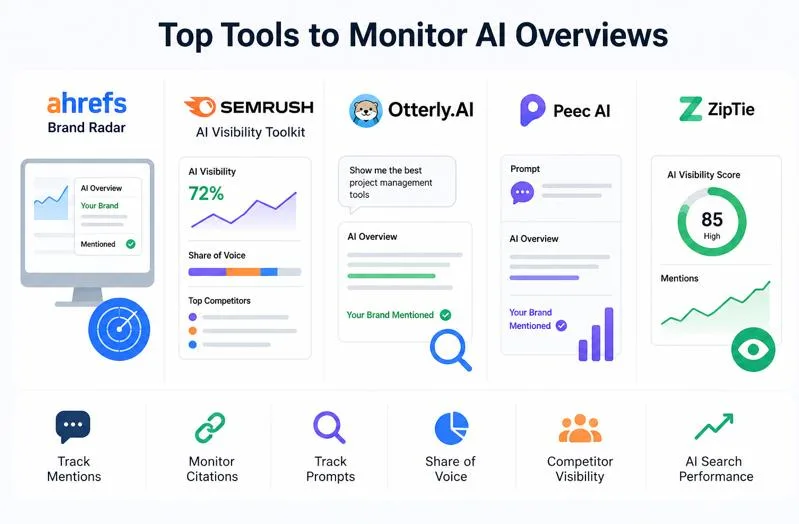
The category is growing quickly, but a few names stand out because they clearly describe AI visibility features on their official product pages. Ahrefs Brand Radar says it helps track AI visibility across a large prompt database and supports custom prompts. Semrush AI Visibility Toolkit says it helps track brand visibility, analyze competitors, monitor prompts, and generate AI search reports.
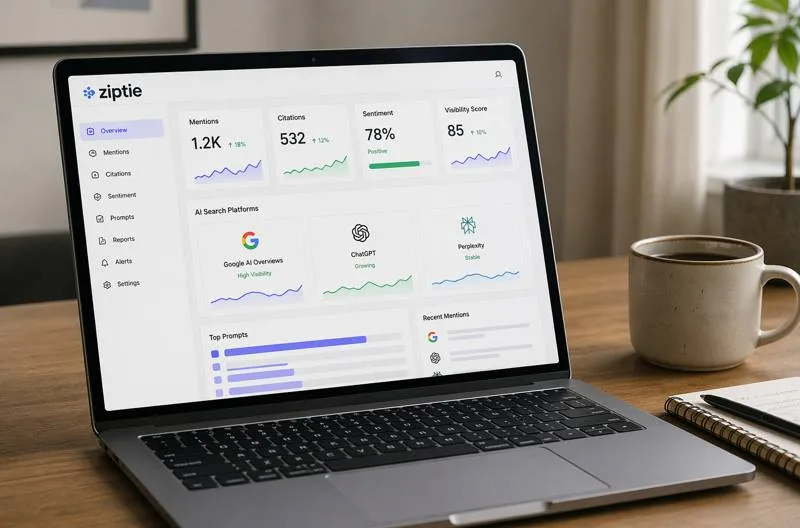
OtterlyAI says it tracks brand mentions and website citations across Google AI Overviews, AI Mode, ChatGPT, and Perplexity. Peec AI presents itself as AI search analytics for marketing teams, with a focus on visibility, competitor tracking, and source insight. ZipTie focuses on AI search visibility and optimization across Google AI Overviews, ChatGPT, and Perplexity, with emphasis on citations, sentiment, and recommendations. ([semrush.com](https://www.semrush.com/kb/1493-ai-visibility-toolkit?utm_source=chatgpt.com))
These tools do not all feel the same. Some fit larger SEO teams that already use broader search suites. Others feel more focused and cleaner for teams that mainly want AI search insight. That is why choosing the right one depends more on workflow fit than on hype.
Integrated Platforms Versus Focused AI Monitoring Platforms
Ahrefs and Semrush have one obvious advantage. Many teams already use them. That means AI visibility data can sit beside traditional SEO and content reporting instead of living in a separate platform. For busy teams, this can make adoption easier and reporting more consistent.
On the other hand, tools like OtterlyAI, Peec AI, and ZipTie may feel more focused if AI visibility is the main problem you want to solve. A dedicated platform can feel simpler, faster, and more directly useful if you do not need a large all in one SEO suite around it.
Neither approach is automatically better. It depends on whether your team values integration, specialization, speed, or broader SEO context the most.
If your team cares about stronger systems and smarter digital operations, professional digital solutions is another natural internal read. AI visibility tools create more value when they become part of a better workflow, not just another tab in the browser.
How These Tools Help Real Marketing and SEO Work
AI visibility management tools become most useful when they change decisions. For example, a team may learn that competitors are cited in AI answers for high intent prompts while their own brand is invisible. That can lead to stronger comparison pages, better product explanations, and clearer entity signals.
A different team may discover that it gets mentioned often but cited rarely. That points to a source trust issue rather than a simple awareness problem. Another may find that it performs well on informational prompts but disappears on buying or decision prompts, which can reveal a content gap that normal rankings did not show clearly.
This is why management matters more than monitoring alone. The tool gives you visibility into the problem. The real gains come when your team improves content, improves source trust, strengthens pages, and tracks the result again over time.
If you are also reviewing your wider AI tool stack, best 5 AI business tools in 2026 for productivity and growth fits naturally here. Many teams exploring AI search visibility are also deciding which AI tools deserve a long term place in their workflow.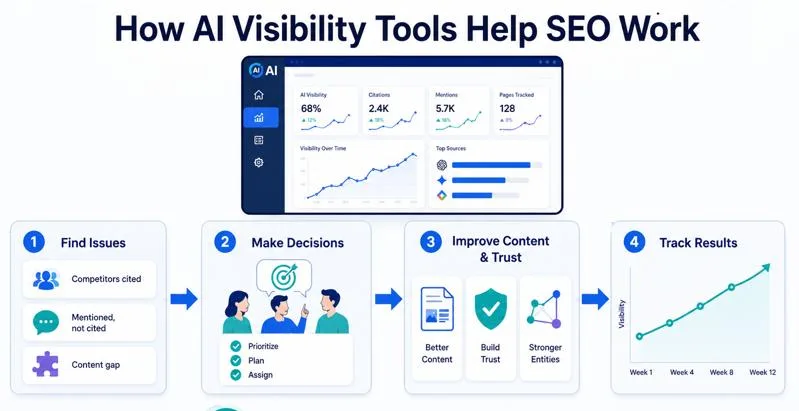
Who Should Use AI Search Visibility Management Tools
These tools make the most sense for brands that already care about search visibility and know that AI answers are changing the discovery path. That includes SaaS companies, agencies, ecommerce brands, publishers, and service businesses that depend on trust, research, and category visibility online.
They are also helpful for teams that need better reporting for leadership or clients. If someone keeps asking whether AI search matters to the brand, these tools can provide a clearer answer. Instead of vague opinions, you can show prompt level visibility, citation movement, and competitive patterns.
However, not every business needs one immediately. If your site still lacks basic SEO strength, thin content may be a bigger problem than AI visibility tracking. These tools become more powerful when your search foundation is already strong enough to measure meaningfully.
Common Mistakes Teams Make With These Tools
The first mistake is expecting the tool to improve visibility by itself. It will not. The tool can show where your brand is weak, but your team still has to improve the content, sources, structure, and authority signals that influence AI answers.
The second mistake is focusing only on mentions. A mention matters, but citations, source trust, and answer framing often matter just as much. A weak mention is not the same thing as being referenced as a trusted source.
The third mistake is treating AI visibility as separate from the rest of SEO. In practice, the best outcomes usually come when traditional SEO and AI visibility work together. Stronger content, clearer pages, and better site quality often support both classic search and AI answer visibility.
How to Choose the Right Tool Without Overcomplicating It
Start with one simple question. What problem are you really solving. If you want broad brand benchmarking and already use a major SEO suite, Ahrefs or Semrush may feel like the easiest move. If you want focused AI answer monitoring without extra platform weight, OtterlyAI, Peec AI, or ZipTie may feel more natural.
Then think about reporting. Who needs to use the data, and how often. A tool becomes much more valuable when the insights are easy to understand and easy to share with content teams, leadership, or clients. If the data feels too complex, it often gets ignored.
The smartest choice is not always the most famous tool. It is the one your team will actually use, understand, and turn into action. That is what makes a visibility management platform worth paying for over time.
Conclusion
AI search visibility management tools help brands understand and improve how they appear in AI generated answers across major platforms. They matter because normal rankings no longer tell the full story. Prompts, mentions, citations, sentiment, and competitor visibility now shape discovery in ways that many teams are only starting to measure seriously.
The best next step is practical. Pick a tool that matches your workflow, track the prompts that matter most, compare your visibility with competitors, and use that data to improve the content and sources behind your brand. That is how AI search visibility management becomes a strategy instead of just another buzzword.