
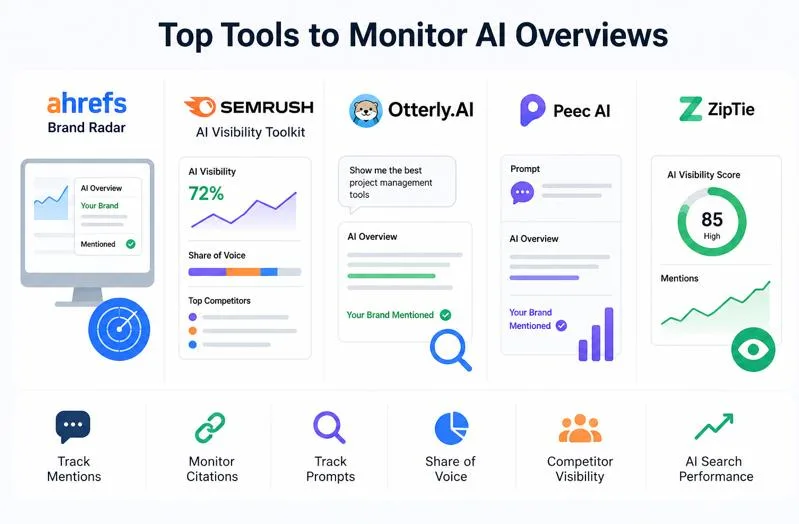
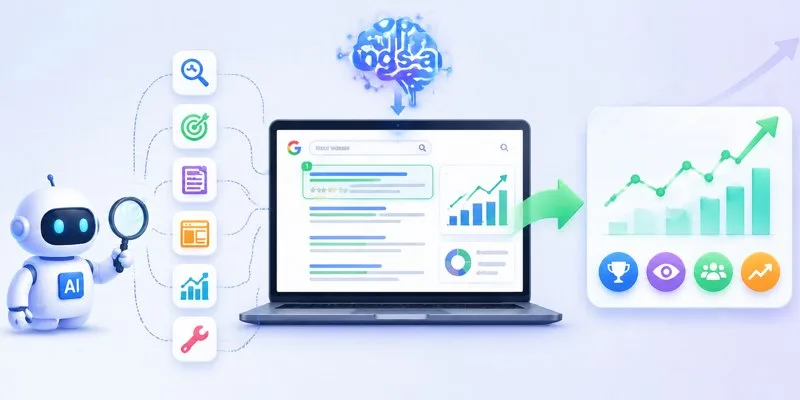
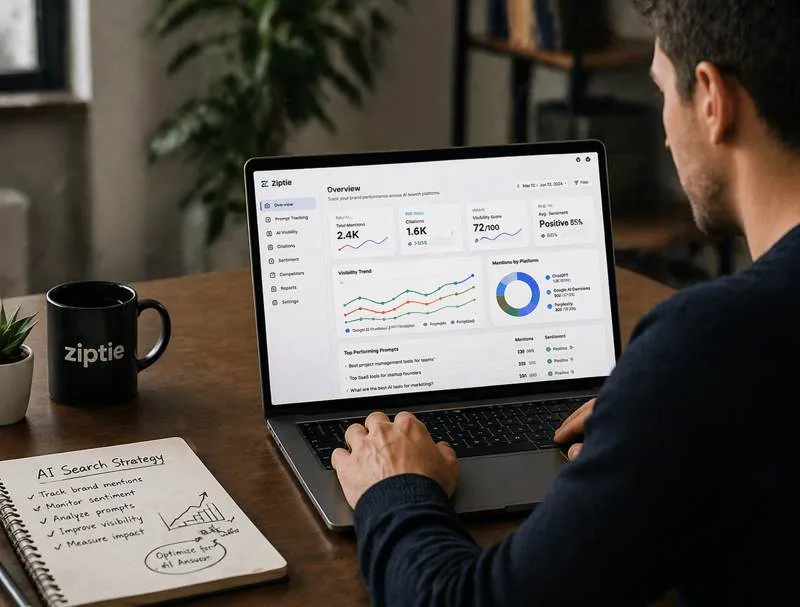
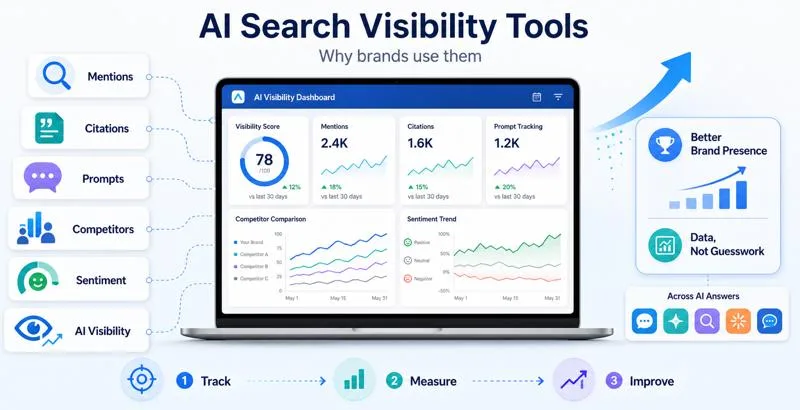
The best tools for monitoring AI Overviews right now are Ahrefs Brand Radar, Semrush AI Visibility Toolkit, OtterlyAI, Peec AI, and ZipTie. These tools help brands track mentions, citations, prompts, share of voice, and competitor visibility inside AI generated answers so teams can improve AI search performance instead of guessing.
That short answer helps, but it is not enough for a smart choice. Some tools are stronger for broad enterprise research, some are better for prompt level tracking, and some feel easier for smaller teams that want focused AI visibility data. This guide will help you choose the tool that fits your real workflow, not just the one with the loudest marketing.
Why Monitoring AI Overviews Matters More Than Before
Google AI Overviews change what users see first. Instead of reading only blue links, people may now get a summary answer that mentions brands, cites sources, and frames the topic before they visit any page. That means a brand can win visibility inside the answer or lose attention before the click even happens.
This creates a new search problem. A website may rank well in normal search and still not appear much inside AI Overviews. At the same time, a brand may get cited inside an AI answer even if it is not the number one organic result. That is why normal rank tracking no longer tells the full story.
Monitoring tools help close that gap. They show whether your brand is being mentioned, whether your pages are being cited, which prompts trigger visibility, and how competitors compare across the same questions.
If you like beginner friendly AI explainers, what are AI agents, a simple guide for non tech people is a natural internal read. It fits well because both topics help readers understand how AI driven systems change online discovery.
What a Good AI Overview Monitoring Tool Should Actually Do
A good tool should do more than count whether your brand appears once. It should help you understand how often you show up, on which prompts, with what kind of citations, and how your presence compares with other brands in the same category.
You should also look at platform coverage. Some tools focus mainly on Google AI Overviews. Others also track ChatGPT, Perplexity, Gemini, Copilot, AI Mode, or other AI search environments. That wider coverage matters because brand discovery is now spreading across several AI systems, not only one.
Another important factor is actionability. A dashboard is useful, but the best tools help you decide what to do next. That could mean identifying missing prompts, weak citation coverage, low share of voice, or better source opportunities for future content.
| Tool | Best For | Main Strength | Why It Stands Out |
|---|---|---|---|
| Ahrefs Brand Radar | Large scale brand and competitor research | Very large prompt database and custom prompts | Strong for broad AI visibility benchmarking |
| Semrush AI Visibility Toolkit | Teams already using Semrush | AI visibility plus broader SEO workflow | Practical for integrated reporting and planning |
| OtterlyAI | Focused AI search monitoring | Citation tracking and prompt library approach | Good for fast setup and multi engine tracking |
| Peec AI | Marketing teams that want clear AI search analytics | Visibility, competitor tracking, and sentiment | Useful for marketers who want focused AI metrics |
| ZipTie | Brands wanting monitoring plus optimization guidance | Prompt suggestions and recommendation driven workflow | Strong for teams that want next step ideas, not only raw data |
Ahrefs Brand Radar
Ahrefs Brand Radar is one of the strongest options if you want broad AI visibility monitoring at scale. Its official pages say it tracks brand visibility across a very large database of search backed prompts and also supports custom prompts. That makes it especially useful for larger brands, agencies, and teams that want wide competitive coverage instead of only a small hand built query list.
Another big strength is depth. Ahrefs already has a mature search ecosystem, so teams can connect AI visibility with broader search research more naturally. This is helpful when you want to understand not only AI mentions, but also the larger search context around the brand, the topic, and the market.
The main downside is that it may feel bigger than some smaller teams need. If you want a lightweight AI overview tracker only, Ahrefs can feel like a more serious platform than that. However, for brands that want scale and deep benchmarking, it is one of the top options to consider.
Semrush AI Visibility Toolkit
Semrush AI Visibility Toolkit makes a lot of sense for teams already living inside the Semrush ecosystem. Semrush says the toolkit helps track brand visibility in AI generated answers, analyze competitors, monitor prompts, benchmark sentiment, and turn results into reports. That makes it practical for marketing teams that want AI visibility inside a familiar broader SEO workflow.
This is one reason Semrush can be such a comfortable fit for in house teams. Instead of adding a completely separate system, they can keep AI visibility next to the other search and content work they already manage. That can lower friction and make adoption easier across a team.
It also helps connect AI Overview tracking to strategy. If your content, SEO, and reporting work already runs through Semrush, then adding AI visibility in the same environment can save time and keep decisions more connected.
Why Semrush Works Well for Existing SEO Teams
Semrush stands out because it does not treat AI Overviews like an isolated topic. It treats them as part of the new search environment. That matters for teams that already manage rankings, competitors, technical SEO, and content planning in one place.
In simple terms, it lets a team grow into AI search monitoring without rebuilding everything from zero. That is a strong advantage when your workflow is already busy and you need reporting that feels familiar.
If you care about bigger digital workflow ideas, professional digital solutions is another natural internal read. It fits because a good monitoring tool becomes more valuable when it strengthens the whole process, not only one dashboard.
OtterlyAI
OtterlyAI is one of the more focused AI search monitoring platforms in this group. Its official site says it tracks brand mentions and website citations across Google AI Overviews, AI Mode, ChatGPT, Perplexity, and other AI systems. It also highlights prompt libraries, automated monitoring, citation visibility, and country level tracking.
This focused positioning makes OtterlyAI attractive for teams that want dedicated AI search tracking without buying a very large all in one SEO suite. If your main concern is AI search visibility itself, rather than broader organic reporting, that direct focus can be useful.
OtterlyAI also appears friendly for prompt based workflows. If your team already thinks in terms of conversational user questions, its approach can feel practical because it mirrors how real users ask AI systems for recommendations and comparisons.
Peec AI
Peec AI positions itself as AI search analytics for marketing teams. Its official site and docs describe tracking visibility across models, monitoring competitors, finding citation opportunities, spotting content gaps, and following trends over time. That makes it appealing for teams that want a clean analytics style view of AI search performance.
One useful angle here is clarity. Peec feels built for marketers who want insight without turning the whole workflow into a technical research project. Visibility, competitor performance, citations, and sentiment all connect to decisions content and brand teams already care about.
Peec may be especially helpful if your team wants a focused AI analytics platform that still feels strategic. It is not only about whether you appear. It is also about whether you are growing, where competitors are winning, and which source patterns shape that visibility.
Where Peec AI Stands Out
Peec stands out when a team wants straightforward AI search analytics and competitor insight without too much extra complexity. Its positioning around visibility, sentiment, and content gaps is useful for marketers who need clear signals they can act on quickly.
That makes it a practical choice for teams who care about AI discovery but still want the tool to feel understandable and focused. In a fast moving area like AI search, simplicity can be a real advantage.
If you are comparing other AI focused business tools too, best 5 AI business tools in 2026 for productivity and growth is a relevant internal read. Many teams looking at AI Overview monitoring are also thinking about their wider AI tool stack.
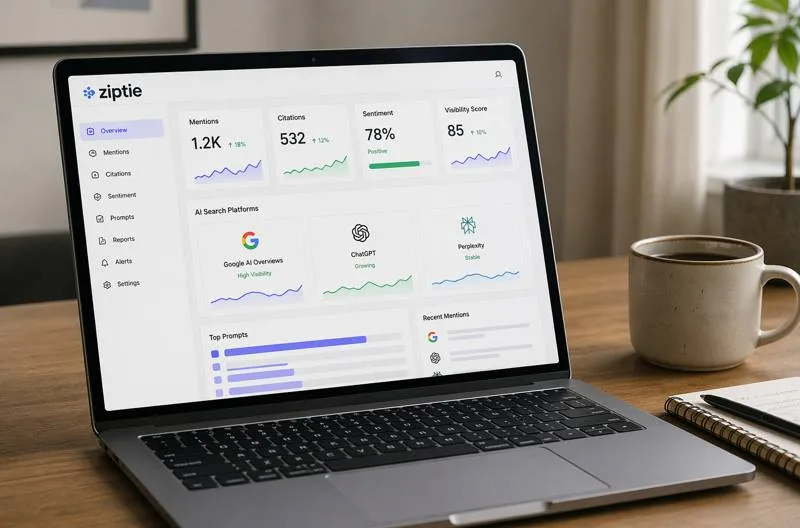
ZipTie
ZipTie is another strong option, especially for teams that want AI monitoring plus guidance on what to improve next. Its official materials describe tracking across Google AI Overviews, ChatGPT, and Perplexity, while also highlighting query discovery, sentiment analysis, citation tracking, and optimization recommendations.
This matters because some teams do not only want data. They want direction. ZipTie appears built for that use case. It helps show which prompts matter, where the brand is weak, and where improvements may have the biggest effect.
That makes it a good fit for marketers who want AI search data to lead naturally into content or visibility decisions. If your team values monitoring plus practical next steps, ZipTie deserves a serious look.
How to Choose the Right Tool for Your Team
The best tool depends on what kind of team you have and what kind of problem you are trying to solve. If you want the broadest large scale brand research, Ahrefs Brand Radar may be the best fit. If you already run much of your SEO inside Semrush, the AI Visibility Toolkit may feel more natural.
If you want a more focused AI search monitoring platform, OtterlyAI or Peec AI may be easier to adopt. If you want monitoring with stronger optimization guidance and prompt discovery support, ZipTie may fit better. The smartest choice comes from workflow fit, not only feature lists.
A simple test helps here. Ask whether your team needs scale, integration, simplicity, or guidance. Once you answer that clearly, the tool decision gets much easier.
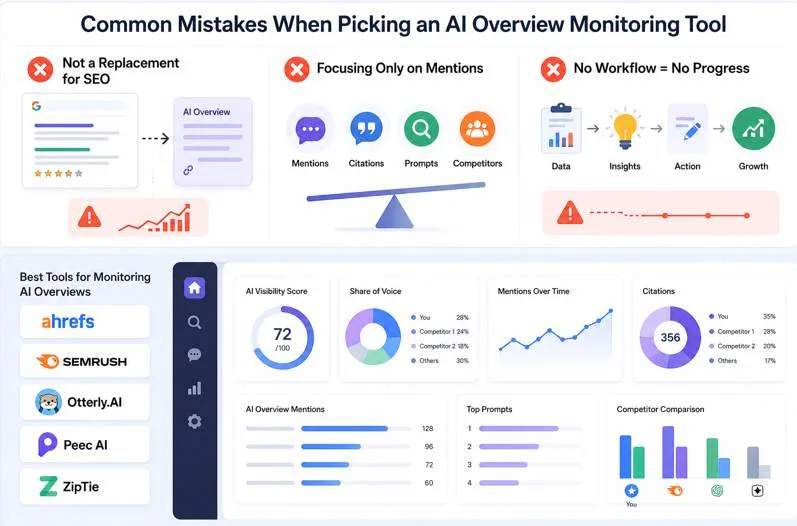
Common Mistakes When Picking an AI Overview Monitoring Tool
The first mistake is expecting the tool to replace SEO. It will not. Traditional SEO still matters because AI Overviews often rely on sources, authority, and site quality that come from the broader search ecosystem. These tools add an AI visibility layer, not a full replacement for organic strategy.
The second mistake is focusing only on mentions. Mentions matter, but citations, prompt level coverage, and competitor comparison often matter just as much. A brand may appear in AI answers yet still be weak in the areas that drive trust and clicks.
The third mistake is buying a tool without a workflow for using it. Monitoring data becomes valuable only when it leads to better content, stronger source visibility, and clearer strategy. Otherwise, you are paying for a report instead of progress.
Conclusion
The best tools for monitoring AI Overviews right now are Ahrefs Brand Radar, Semrush AI Visibility Toolkit, OtterlyAI, Peec AI, and ZipTie. Each one solves the same core problem in a slightly different way, helping brands understand whether they are visible, cited, and competitive inside AI generated answers.
The smartest next step is not to ask which tool sounds coolest. Ask which one matches your real workflow, your reporting needs, and your AI search goals. If you do that, you will pick a tool that not only shows data, but also helps your team make better decisions with it.