
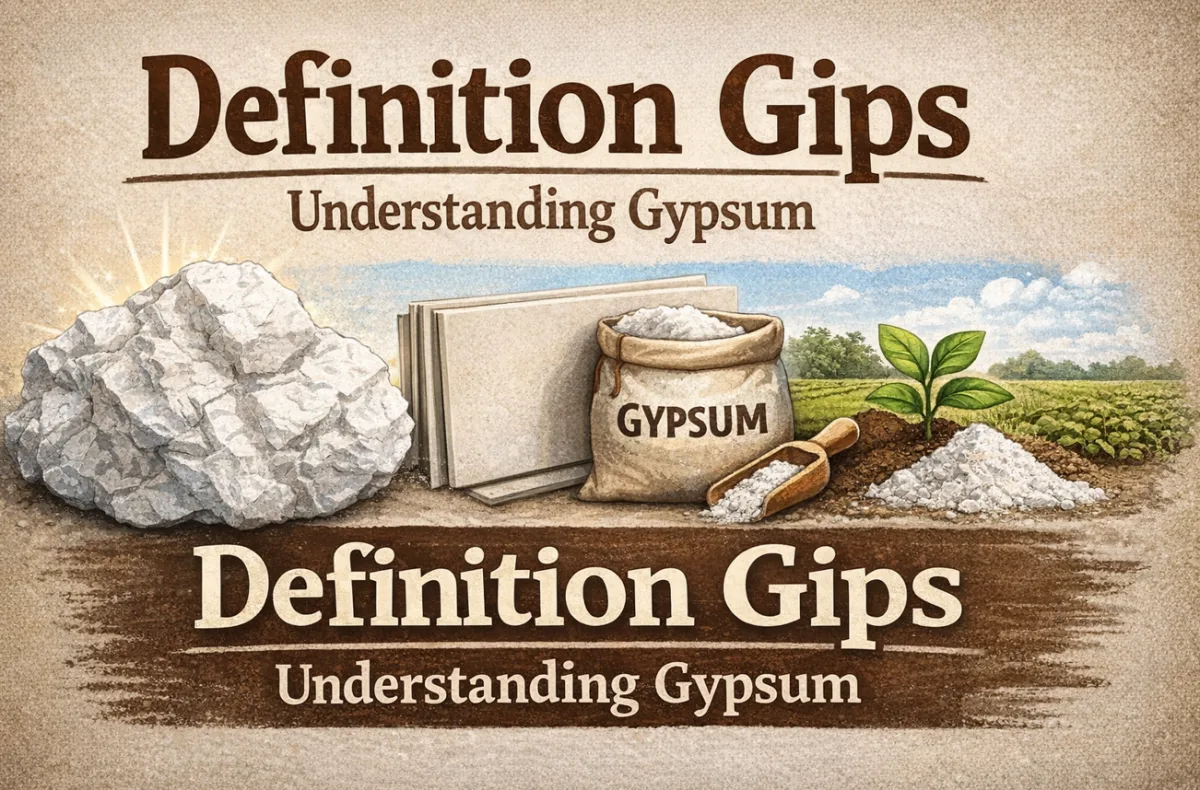
Definition gips refers to a detailed explanation of what gypsum, often called gips, is and how it is used in construction, agriculture, and everyday materials. In simple words, gypsum is a soft mineral that people process into plaster, drywall, cement additives, and soil conditioners.
Definition gips is important because gypsum plays a major role in modern buildings and farming. From walls inside homes to improving soil quality for crops, gypsum supports many industries. Understanding its definition, properties, and uses helps you see why it is such a valuable natural resource.
If you have ever touched drywall, walked inside a modern house, or seen plaster ceilings, you have already experienced gypsum in action. In this guide, we will explore the definition gips in detail, how it works, its benefits, and practical tips for using it effectively.
What is the Definition Gips?
The definition gips describes gypsum as a naturally occurring mineral made from calcium sulfate dihydrate. It forms when seawater evaporates in shallow basins over thousands of years. As water disappears, minerals such as gypsum settle and create thick deposits underground.
This mineral looks soft and white or light gray. In many places, miners extract it from the earth and process it into powder or boards. Builders and manufacturers then use it to create products like plaster, drywall panels, and cement additives.
Gypsum also has a unique property. When heated and mixed with water, it becomes a paste that hardens again. Because of this feature, builders can shape it easily for walls, ceilings, and decorative designs.
Key Properties of Gypsum
Understanding the properties of gypsum helps explain why it is widely used in construction and agriculture. The mineral is lightweight, fire resistant, and easy to shape. These qualities make it perfect for building materials.
In addition, gypsum is environmentally friendly compared with many other construction materials. It does not release harmful chemicals during normal use and can often be recycled.
| Property | Description |
|---|---|
| Color | Usually white, gray, or slightly pink |
| Hardness | Very soft mineral, easy to scratch |
| Main Component | Calcium sulfate dihydrate |
| Fire Resistance | High resistance due to water content |
| Environmental Impact | Recyclable and low toxicity |
Main Types of Gypsum
Although many people think gypsum is just one material, it actually comes in several forms. Each type serves a specific purpose depending on how manufacturers process it.
Natural Gypsum
Natural gypsum comes directly from mineral deposits in the earth. Mining companies extract it, crush it, and process it into powder or panels. Most drywall boards used in houses come from natural gypsum.
Synthetic Gypsum
Synthetic gypsum forms as a byproduct from industrial processes, especially power plants that remove sulfur from emissions. This recycled material works almost the same as natural gypsum and helps reduce industrial waste.
Plaster of Paris
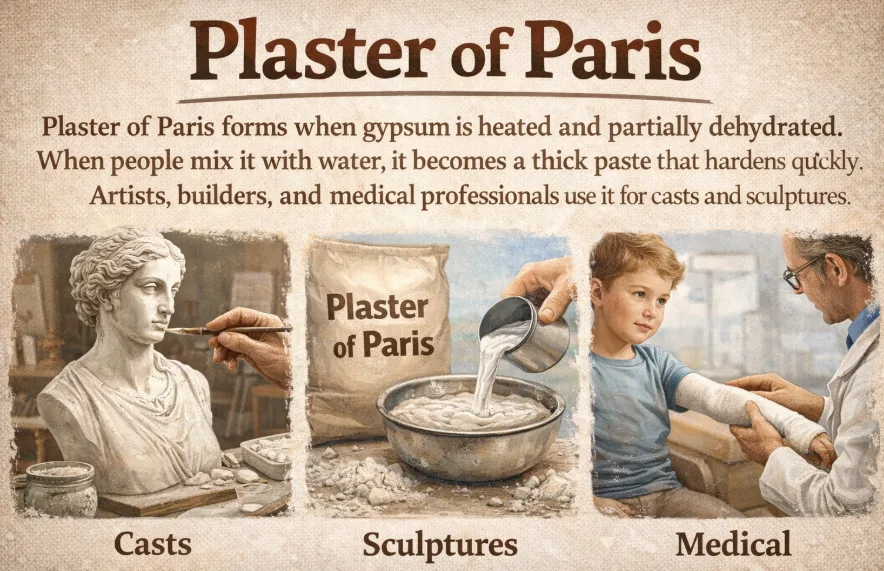
Plaster of Paris forms when gypsum is heated and partially dehydrated. When people mix it with water, it becomes a thick paste that hardens quickly. Artists, builders, and medical professionals use it for casts and sculptures.
Common Uses of Gypsum
Gypsum is everywhere around us, even if we rarely notice it. Its versatility allows industries to use it in many different ways.
Construction Industry
Construction is the largest user of gypsum. Builders use gypsum boards, also called drywall, to create smooth walls and ceilings. These panels are lightweight, easy to install, and resistant to fire.
Gypsum plaster also helps create decorative designs on ceilings and walls. Many modern buildings use it for both beauty and safety.
Agriculture
Farmers use gypsum as a soil conditioner. It helps improve soil structure, especially in clay soils. This allows water to move more easily through the soil and supports better root growth.
In addition, gypsum provides calcium and sulfur, two nutrients that plants need for healthy growth.
Cement Production
Cement manufacturers add a small amount of gypsum to control how quickly cement sets. Without gypsum, cement would harden too fast and become difficult to work with during construction.
Medical and Art Applications
Doctors use plaster made from gypsum to create casts for broken bones. The material molds easily around the body and hardens quickly, providing strong support for healing.
Artists also use gypsum plaster to create sculptures, molds, and decorative artwork.
Benefits of Using Gypsum
Gypsum provides many benefits that explain its popularity across industries. Its natural properties make it practical, affordable, and environmentally friendly.
Fire Resistance
One of the biggest advantages of gypsum is its fire resistance. The mineral contains water molecules that release steam when exposed to heat. This process slows down fire spread and protects building structures.
Sound Insulation
Gypsum boards also help reduce noise between rooms. Many homes and offices use drywall because it improves indoor comfort by blocking sound.
Easy Installation
Builders prefer gypsum because it is lightweight and easy to cut. Workers can install drywall panels quickly, which saves time and labor costs during construction.
Eco Friendly Material
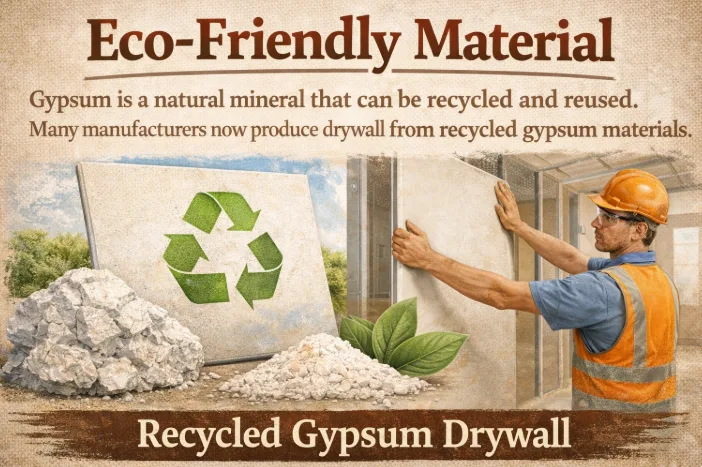
Gypsum is a natural mineral that can be recycled and reused. Many manufacturers now produce drywall from recycled gypsum materials.
You can read more about gypsum mineral properties from the Encyclopedia Britannica, which explains its geological formation and characteristics.
How Gypsum is Processed
The journey from raw gypsum rock to finished building materials involves several steps. Each stage helps transform the mineral into useful products.
Mining
First, companies mine gypsum from underground deposits or open pit mines. Workers extract large chunks of rock and transport them to processing plants.
Crushing and Grinding
Next, machines crush the gypsum rock into smaller pieces. Grinding mills then turn it into fine powder, which manufacturers can process further.
Heating
Manufacturers heat the powdered gypsum to remove some water. This process creates plaster powder that can later react with water and harden again.
Product Manufacturing
Finally, factories use the powder to create drywall boards, plaster products, or cement additives.
Tips for Using Gypsum in Construction
If you plan to use gypsum materials in construction projects, a few practical tips can help ensure better results.
First, store gypsum boards in a dry place. Moisture can weaken the boards before installation.
Second, cut drywall carefully using proper tools. Clean cuts help create smooth wall joints and reduce finishing work later.
Third, always seal joints with tape and joint compound. This creates a smooth surface ready for painting.
For more information about gypsum in building materials, you can visit the United States Geological Survey which provides research and mineral data.
Common Mistakes People Make With Gypsum
Many beginners make small mistakes when working with gypsum products. However, avoiding these errors can improve both safety and quality.
One common mistake is exposing gypsum boards to water for long periods. Gypsum absorbs moisture easily, which can damage the material.
Another mistake is mixing plaster too quickly. If you add too much water or mix poorly, the plaster may not harden properly.
Finally, some builders skip proper finishing steps. Without sanding and smoothing joints, drywall surfaces may look uneven after painting.
Future of Gypsum in Sustainable Construction
The construction industry is moving toward greener materials, and gypsum plays an important role in that transition. Because it is recyclable and widely available, many experts consider it a sustainable building material.
Researchers are also developing improved gypsum boards that resist moisture, mold, and fire even better than traditional versions.
As cities grow and construction continues worldwide, gypsum will likely remain one of the most important materials for safe and efficient buildings.
Conclusion
Understanding the definition gips helps us appreciate how valuable gypsum truly is. This simple mineral supports construction, agriculture, medicine, and art in many ways.
From drywall walls to healthier soil for crops, gypsum continues to improve everyday life. Its natural properties, fire resistance, and eco friendly nature make it a reliable choice for modern industries.
If you are studying building materials, working in construction, or simply curious about minerals, learning about gypsum is a great place to start. Explore how it is used around you and you will notice it almost everywhere.