

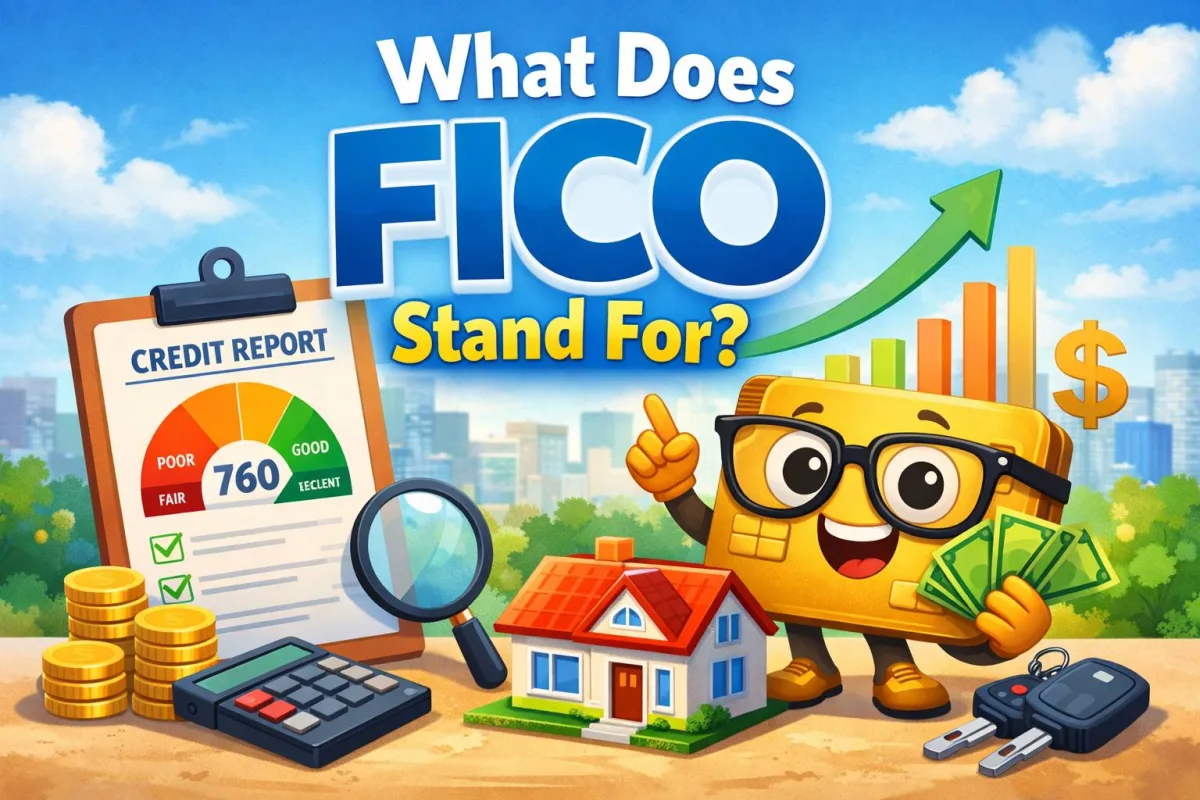


If you have ever applied for a credit card, loan, or mortgage, you probably heard the term what does FICO stand for. Many people see the word FICO on their credit report but do not really know what it means or why it matters.
In simple terms, FICO stands for Fair Isaac Corporation. It is the company that created the most widely used credit scoring system in the United States. Lenders use the FICO score to decide whether to approve loans and what interest rate to offer.
This guide will explain what FICO means, how the score works, why it matters, and how you can improve your credit score step by step. By the end, you will clearly understand how FICO affects your financial life.

What Does FICO Stand For?
The answer to the question what does FICO stand for is simple. FICO is short for Fair Isaac Corporation, a data analytics company founded in 1956 by Bill Fair and Earl Isaac.
The company created the FICO credit scoring system to help lenders measure credit risk. Before this system existed, banks used manual methods and personal judgment to decide whether someone deserved credit.
However, those methods often caused bias and inconsistency. Therefore, FICO developed a mathematical scoring system that evaluates credit data objectively and predicts how likely someone is to repay a loan.
What Is a FICO Score?
A FICO score is a three digit number that represents your credit risk. Lenders use this number to decide whether you qualify for loans, credit cards, or financing.
The score usually ranges from 300 to 850. A higher score shows that you are a responsible borrower who pays debts on time. A lower score tells lenders that lending money to you may involve higher risk.
According to the official FICO education page, more than 90 percent of top lenders use FICO scores when making credit decisions.
Typical FICO Score Ranges
Credit scores fall into different categories. Each range signals a different level of financial reliability to lenders.
| FICO Score Range | Rating | Meaning |
|---|---|---|
| 800 to 850 | Exceptional | Very low risk borrower, best loan terms available |
| 740 to 799 | Very Good | Strong credit profile, easy loan approvals |
| 670 to 739 | Good | Average borrower with good credit behavior |
| 580 to 669 | Fair | Higher risk, limited loan options |
| 300 to 579 | Poor | High risk borrower, loan approval difficult |
This range system helps lenders quickly understand how trustworthy a borrower may be.
Why the FICO Score Is So ImportantYour FICO score plays a major role in your financial life. Banks, lenders, and even some employers may review this score when evaluating your financial responsibility.
A high score gives you access to better financial opportunities. For example, you may qualify for lower interest rates on mortgages, personal loans, and auto loans.
However, a low score can make borrowing expensive. You may pay higher interest rates or even get denied for credit.
Situations Where FICO Scores Are Used
Lenders use FICO scores in many real life situations. Understanding these scenarios helps you see why maintaining a good score matters.
- Applying for credit cards
- Getting a home mortgage
- Applying for personal loans
- Car financing
- Renting an apartment
- Insurance risk evaluation
The Federal Trade Commission also explains that lenders rely heavily on credit data when evaluating borrowers.
How the FICO Score Is Calculated
FICO uses a complex formula to calculate credit scores. However, the company publicly shares the main factors that influence the score.
Each factor has a different level of importance. Some behaviors impact the score more strongly than others.
| Factor | Impact Percentage | Description |
|---|---|---|
| Payment History | 35% | Shows whether you pay bills on time |
| Amounts Owed | 30% | Total debt compared to available credit |
| Length of Credit History | 15% | How long your credit accounts have existed |
| Credit Mix | 10% | Variety of credit accounts such as loans and cards |
| New Credit | 10% | Recent credit applications and new accounts |
Understanding these factors helps you focus on the habits that improve your credit score.
Tips to Improve Your FICO Score
Improving your credit score is possible with consistent financial habits. Small changes in how you manage credit can produce big improvements over time.
Always Pay Bills on Time
Payment history has the largest impact on your FICO score. Even a single late payment can lower your score significantly. Setting automatic payments or reminders can help you avoid missed payments and protect your credit record.
Reduce Your Credit Card Balances
Your credit utilization ratio matters a lot. This ratio compares how much credit you use versus your total credit limit.
Experts often recommend keeping credit utilization below thirty percent. Lower balances signal responsible credit management.
Avoid Too Many Credit Applications
Each credit application creates a hard inquiry on your report. Too many inquiries within a short period may lower your score. Therefore, apply for credit only when you truly need it.
Keep Older Accounts Open
The age of your credit accounts contributes to your credit history length. Older accounts demonstrate long term financial stability. Closing old accounts may shorten your credit history and slightly reduce your score.
Common Myths About FICO Scores
Many people misunderstand how credit scores work. These myths can lead to poor financial decisions.
Checking Your Own Score Lowers It
This is a common misconception. Checking your own credit score creates a soft inquiry, which does not affect the score. Monitoring your credit regularly actually helps you detect errors or fraud early.
Income Determines Your Credit Score
Your income does not directly influence your FICO score. The score measures credit behavior, not how much money you earn. Someone with a moderate income can still have an excellent score if they manage credit responsibly.
Closing Credit Cards Improves Your Score
Many people believe closing cards boosts credit scores. However, closing accounts can increase credit utilization and reduce credit history length. Therefore, keeping older accounts open often benefits your score.
How to Check Your FICO Score?
Monitoring your credit score regularly helps you stay financially healthy. Fortunately, checking your score is easier than ever. You can access your credit reports through official government supported services or credit monitoring platforms.
Many banks and credit card companies now offer free FICO score tracking for customers as part of their financial tools.
Conclusion
Understanding what does FICO stand for is an important step toward managing your financial future. FICO represents Fair Isaac Corporation, the company that created the credit scoring system used by most lenders today.
Your FICO score influences loan approvals, credit card limits, and interest rates. Therefore, maintaining good credit habits such as paying bills on time and keeping balances low can greatly improve your financial opportunities.
If you want stronger financial freedom, start monitoring your credit score regularly and follow the strategies discussed in this guide. Over time, smart credit behavior can help you build an excellent credit profile.