




Buying a home services business means purchasing an existing company that serves homeowners, such as a plumbing, HVAC, cleaning, landscaping, roofing, pest control, or electrical business. It can save time and lower some startup risk, but you still need to review the financial records, customer base, equipment, staff, and legal details very carefully.
That quick answer helps, but the real decision is deeper than that. A business may look great on the surface and still have weak margins, bad reviews, old equipment, or unreliable employees. This guide will help you think like a smart buyer, not an excited one.
Why People Want to Buy a Home Services Business
Home services businesses attract buyers for a simple reason. People keep needing these services. Homes always need repairs, maintenance, cleaning, upgrades, and seasonal work. That creates steady local demand when the company is run well.
Another big reason is speed. When you buy an existing business, you may get an active phone number, working website, trained staff, service vehicles, and repeat customers on day one. That can be much easier than starting from scratch and waiting months to build trust.
It also feels more tangible than some other business models. You can often see the trucks, talk to the staff, review the jobs, and understand how the money comes in. For many first time buyers, that makes the opportunity feel more real and less abstract.
What Counts as a Home Services Business
A home services business is a company that helps homeowners maintain, repair, improve, or protect their homes. Some examples include plumbing, HVAC, electrical work, roofing, landscaping, pest control, cleaning, handyman services, painting, pool care, and appliance repair.
Each category works a little differently. Some are emergency driven, like plumbing or HVAC repair. Others are repeat service businesses, like cleaning, lawn care, and pest control. That difference matters because recurring revenue often makes a business more predictable.
When choosing a category, think about your own strengths. Do you want a business with fast dispatch and urgent calls. Do you prefer scheduled work and repeat routes. The best fit is not only about profit. It is also about how you want the business to run.
Big Benefits of Buying Instead of Starting
The biggest benefit is momentum. An existing business may already have customers, online reviews, vendor accounts, systems, and brand recognition. That can shorten the learning curve and help you earn faster than a brand new company.
You may also get trained employees and a proven service model. That is helpful if you are strong on business but not yet an expert in the trade itself. A working team can make the transition much smoother when the company has healthy systems in place.
Financing can also be easier in some cases because lenders can review real business history instead of only your idea. The SBA explains that buying an existing business can be a path to ownership, and SCORE emphasizes due diligence because you are buying a real operating company with real records, not just a concept. SBA guide to buying an existing business or franchise. SCORE due diligence and valuation guide.
The Risks You Need to Respect
Buying a business can still go wrong fast. A company may have weak cash flow, hidden debt, bad employee morale, poor customer retention, or equipment that needs expensive replacement. Those problems do not always show up in the first conversation with the seller.
You also need to watch owner dependence. Some home services businesses look strong only because the current owner personally handles sales, dispatch, quality control, and customer trust. If the whole business depends on one person, the value may drop after they leave.
Another risk is overpaying. A good looking company is not always a well priced company. If the seller values the business based on emotion instead of clean financial performance, the deal may stop making sense very quickly.
What to Check Before You Buy
You should start with the financials. Ask for profit and loss statements, tax returns, payroll records, debt details, and a clear list of owner add backs if the seller claims higher true earnings. You want to know what the business really keeps, not only what it collects.
Next, look at the customer mix. A healthy home services company should not depend too much on one big account or one seasonal rush. Repeat customers, maintenance plans, and steady referrals usually make the business stronger and easier to predict.
Then review operations. Check the service area, number of technicians, dispatch process, vehicles, software, vendor terms, licensing, insurance, and online reputation. Small problems in these areas can become big costs after closing.
Financial Records and Real Cash Flow
Cash flow matters more than revenue headlines. A business can show strong sales and still leave you with weak profit if labor is inefficient, marketing is wasteful, or trucks and equipment are draining cash. That is why careful due diligence matters so much when buying an existing business.
Try to understand owner compensation too. Some sellers run personal costs through the business, while others underpay themselves and make profit look better than it really is. You want a clean picture of what the business would earn under normal operation.
If you need help thinking about systems and operations after purchase, professional digital solutions is a relevant internal read. It fits well because many home services companies improve performance by tightening software, communication, and process flow.
Customers, Reputation, and Repeat Work
In a home services business, trust is everything. Check reviews across major platforms, look for patterns in complaints, and ask how much business comes from repeat customers versus one time jobs. A company with steady repeat work is often safer than one that depends only on constant lead generation.
You should also ask where leads come from. Referrals, Google Business Profile traffic, local SEO, yard signs, direct mail, and service agreements all matter. A good lead source mix is healthier than dependence on one expensive advertising channel.
Look closely at customer concentration as well. If a large share of revenue comes from only a few clients, the business may feel bigger than it really is. Diversified demand usually gives you more protection after the handoff.
Staff, Equipment, and Daily Operations
People and equipment can make or break this kind of business. Find out who handles dispatch, who brings in new work, who manages quality, and which employees are truly essential. If two technicians leave and the business falls apart, the risk is higher than it looks.
Check the age and condition of trucks, tools, inventory, and major equipment. A business with low price but high replacement needs may not really be a bargain. You are not only buying income. You are also buying future repair and upgrade costs.
Training matters too. If you plan to grow the company, you will need a system for hiring, onboarding, and keeping people. skill development guide is a natural internal link here because stronger staff development often improves retention and service quality.
How to Value a Home Services Business
Valuation should come from the business, not from the seller’s feelings. Buyers often look at profit, cash flow, recurring revenue, customer retention, service contracts, owner dependence, and how easy the business will be to operate after transition.
A recurring service business often deserves stronger interest than a purely one off project business. That is because repeat revenue can make planning easier and reduce the pressure to keep replacing lost work. However, even recurring revenue needs to be checked carefully.
| Area | What to Look For | Why It Matters |
|---|---|---|
| Cash flow | Clean profit after real expenses | Shows what the business can truly support |
| Customer base | Repeat clients, service plans, low concentration | Makes revenue more stable |
| Owner dependence | How much the business relies on the seller | Affects transition risk |
| Equipment | Truck age, tools, replacement needs | Changes real purchase value |
| Online reputation | Reviews, complaints, local trust | Impacts future sales |
SCORE notes that due diligence and valuation should go together because you need both the numbers and the real business context before deciding on price.
How to Finance the Purchase
Many buyers use savings, seller financing, bank loans, SBA backed loans, or a mix of those options. The right structure depends on your down payment, credit profile, deal size, and how strong the business history looks to a lender.
Seller financing can be especially helpful because it keeps the seller invested in the success of the transition. It can also reduce your upfront cash need. However, the terms still need to be fair, clear, and reviewed carefully before you agree.
If you are comparing financing paths, the SBA is one of the first places to study because it offers guidance for small business buyers and connects entrepreneurs with lenders and resources.
Common Mistakes Buyers Make
The first mistake is falling in love too early. A business can look exciting when the trucks are wrapped, the phones are ringing, and the seller talks confidently. However, excitement is not due diligence, and confidence is not proof.
The second mistake is buying without understanding operations. If you do not know how jobs are booked, priced, delivered, and followed up, you may inherit a mess you did not expect. Numbers matter, but workflow matters too.
The third mistake is weak transition planning. You need to know whether the seller will stay for training, how staff will be informed, and how customers will experience the handoff. A messy transition can hurt revenue even in a good business.
How to Buy Smarter
Start with a clear target. Choose the kind of home services business you want, the size you can afford, and the role you want to play as owner. Then compare deals using the same lens instead of chasing every listing that looks exciting.
Use advisors when needed. An accountant, attorney, lender, and industry mentor can save you from expensive mistakes. You do not need a giant team, but you do need help where the risks are high. That is especially true with legal, tax, and deal structure questions.
Finally, buy for the next five years, not just for the first month. Think about how the business can grow, how stable the demand is, and whether the company still makes sense after the seller is gone. That mindset usually leads to a better decision.
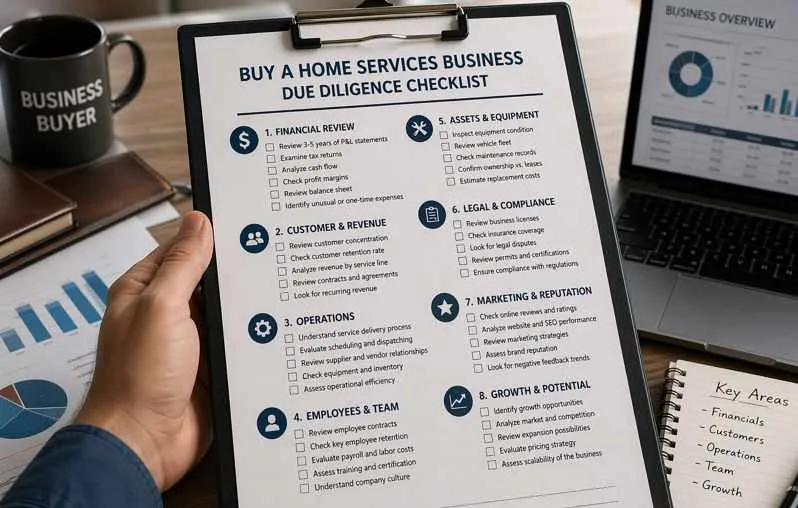
Conclusion
Buying a home services business can be a smart way to step into ownership faster. You may get customers, staff, equipment, and working systems without building everything from the ground up. However, the real win comes from buying carefully, not quickly.
Focus on cash flow, customer quality, staff strength, equipment condition, and how dependent the company is on the current owner. Then structure the deal with discipline and plan the transition well. If you do that, you will be much closer to buying a business that serves you well for years instead of surprising you in all the wrong ways.