
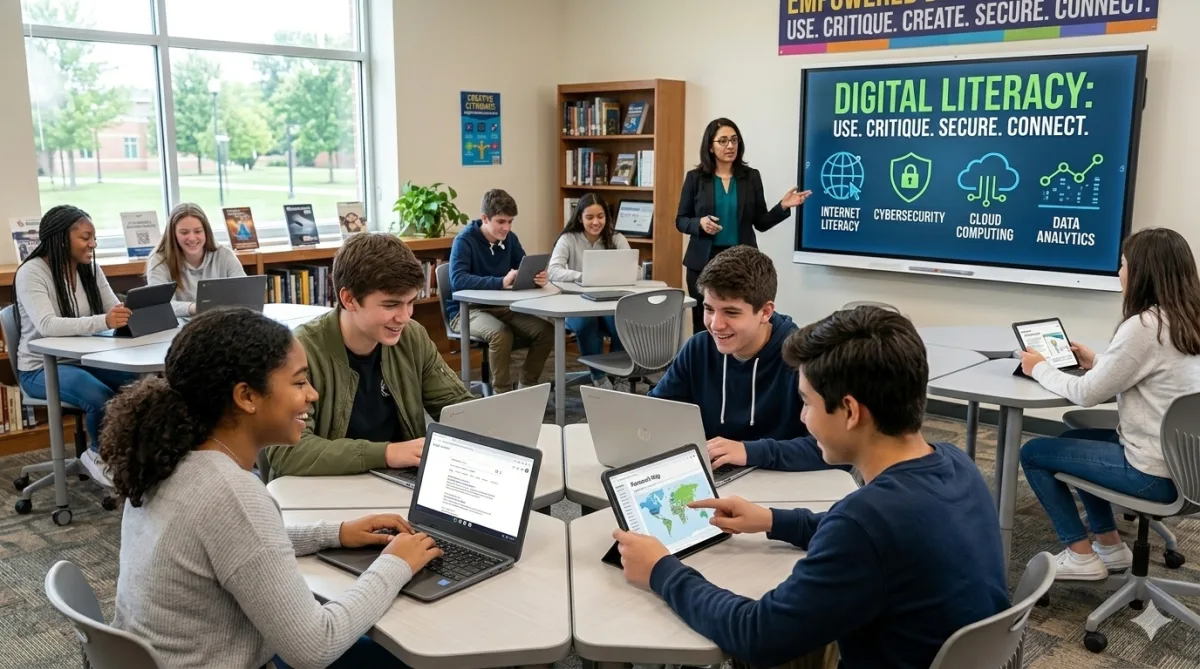
Digital literacy has become a vital skill in modern education. Learn why students need digital skills, how it improves learning, and how schools can integrate technology effectively.
What Is Digital Literacy?
Digital literacy refers to the ability to use digital tools, technologies, and the internet effectively and responsibly. In today’s technology-driven world, students must understand how to access, evaluate, and communicate information through digital platforms.
Unlike basic computer skills, digital literacy includes critical thinking, online safety, and the ability to create digital content. These skills help students navigate the vast amount of information available online and use technology for productive purposes.
Educational institutions are increasingly integrating digital tools into classrooms to prepare students for a future where technology plays a major role in both careers and daily life.
Key Components of Digital Literacy
Some essential components of digital literacy include:
-
Information literacy
-
Online communication skills
-
Digital content creation
-
Cybersecurity awareness
-
Ethical use of technology
These components help students become responsible and capable digital citizens.
Why Digital Literacy Is Important for Students
Digital literacy empowers students to learn more efficiently and adapt to modern educational environments. With online learning platforms, digital libraries, and collaborative tools, students can access information anytime and anywhere.
Another major benefit is improved critical thinking. Students learn how to evaluate online sources, identify misinformation, and make informed decisions.
Digital literacy also prepares students for future careers. Most professions today require employees to use technology, manage digital data, and collaborate through online platforms.
Enhancing Problem-Solving Skills
When students work with digital tools, they often encounter challenges that require troubleshooting and creative thinking. This process strengthens their problem-solving abilities and encourages independent learning.
The Role of Teachers in Promoting Digital Literacy
Teachers play a crucial role in guiding students toward responsible and effective technology use. They must not only teach traditional subjects but also demonstrate how digital tools can enhance learning.
Educators can integrate digital literacy by using interactive presentations, online assignments, and collaborative platforms that encourage participation and engagement.
Professional development for teachers is also important so they can stay updated with evolving technologies and teaching strategies.
Creating a Safe Online Learning Environment
Teachers should also educate students about online safety, including protecting personal information, recognizing scams, and maintaining respectful digital communication.
How Schools Can Integrate Technology Effectively
Schools can promote digital literacy by investing in modern infrastructure and creating technology-friendly learning environments. Access to reliable internet, updated devices, and digital learning platforms is essential.
In addition, schools should develop structured digital literacy programs that teach students how to use technology responsibly.
Collaboration between educators, administrators, and policymakers can ensure that technology enhances education rather than distracts from it.
Encouraging Project-Based Learning
Project-based learning using digital tools allows students to research topics, collaborate with classmates, and present their ideas creatively. This approach improves engagement and helps students apply digital skills in real-world situations.